Defense venture capital for startups has emerged as one of the most dynamic areas of venture capital this year.
For founders building dual-use technologies spanning AI, autonomous systems, cybersecurity, and advanced manufacturing, understanding which venture capital firms lead this space is essential to securing the right funding partner.
The defense tech boom isn’t just about dollars; it’s about a fundamental shift in how America approaches national security.
Venture-backed “neoprimes” like Anduril Industries are challenging legacy contractors by bringing software-first approaches, rapid iteration cycles, and commercial market strategies that traditional defense giants struggle to match.
10 Top Defense Venture Capital for Startups
Which defense VCs should you pitch? Our guide covers the top 10 defense venture capital firms, investment criteria, and startup success stories.
1. Andreessen Horowitz (American Dynamism)

Andreessen Horowitz‘s American Dynamism practice has positioned a16z as a powerhouse in defense tech investing.
Focusing on sectors tied to U.S. national security, including aerospace, defense, public safety, and manufacturing, the firm brings both deep pockets and prestigious brand recognition.
What sets a16z apart is its ability to lead massive growth rounds while providing portfolio companies access to an unparalleled network of government officials, enterprise customers, and follow-on investors.
2. Shield Capital

Founded by former Defense Innovation Unit leader Michael Brown and other defense veterans, Shield Capital brings operational expertise that few firms can match.
Shield Capital’s partners have walked the halls of the Pentagon, have an intimate understanding of procurement cycles, and maintain relationships that can accelerate pilot programs and initial contracts.
Their investments in companies like Rebellion Defense and Apex demonstrate their eye for startups that can navigate the complex dual-use landscape while building commercially viable businesses.
3. Lux Capital

Lux Capital has built its reputation on contrarian bets in frontier technologies, making it a natural fit for defense tech.
They fund hard science innovations spanning space technology, synthetic biology, robotics, and advanced materials, often with defense applications.
With over $5 billion in assets under management and a 20-year track record, Lux doesn’t just provide capital; they champion technologies that others consider too ambitious or too far from commercialization.
4. Founders Fund
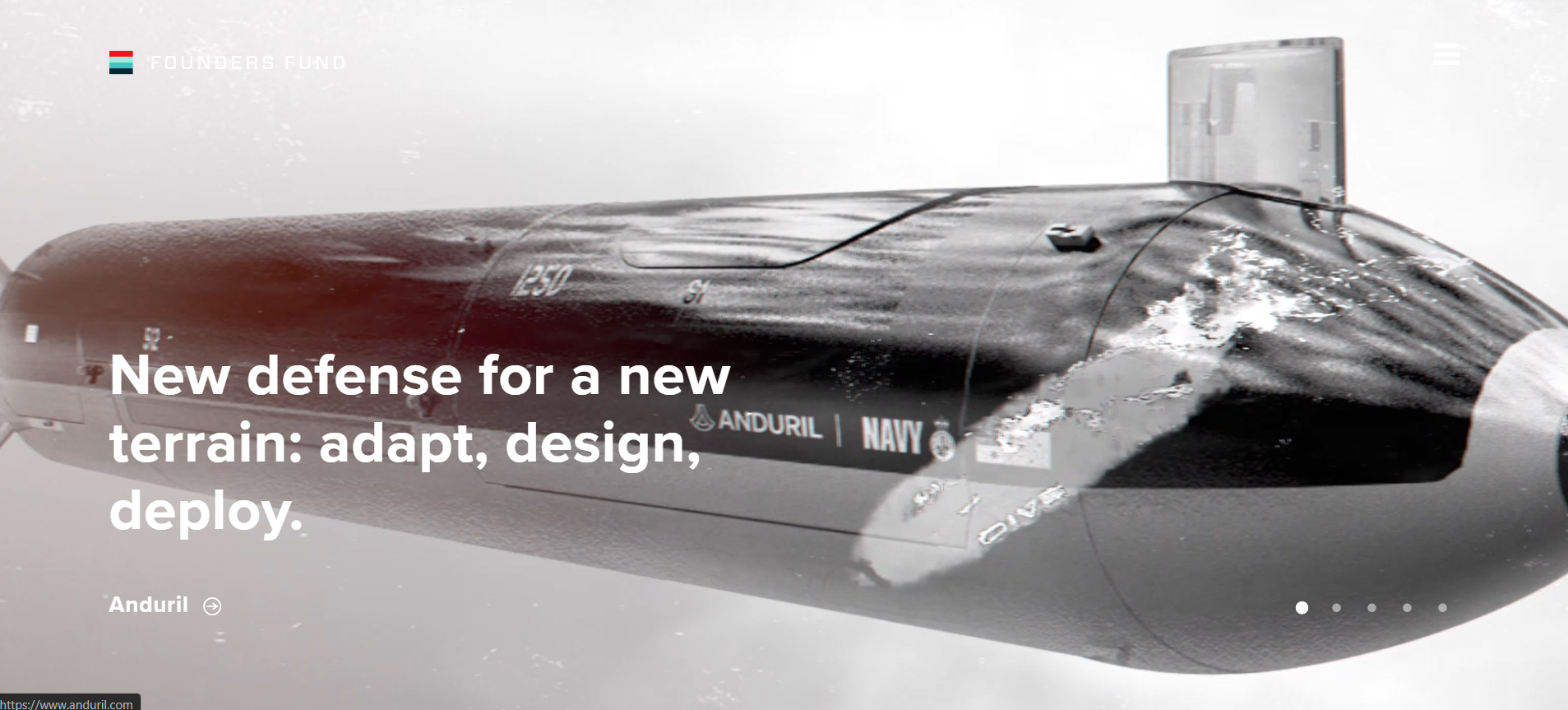
Peter Thiel’s Founders Fund has been a consistent supporter of defense technology, leading major rounds in companies like Anduril and Palmer Luckey’s other ventures.
The firm seeks founders building transformative companies that can reshape entire industries, and they’ve demonstrated remarkable conviction in defense tech despite controversies.
Founders Fund brings not just capital but a contrarian mindset that challenges conventional wisdom about what’s possible.
Their involvement signals to other investors that a startup is building something genuinely disruptive.
5. Decisive Point Ventures

Decisive Point specializes in early-stage investments in critical technologies for defense, energy, and infrastructure.
What distinguishes them is their hands-on approach to helping deep-tech startups navigate government contracting, capture public R&D funding, and scale operations.
They maintain direct engagement with technology accelerators and R&D centers, giving them early exposure to breakthrough innovations.
For technical founders who need strategic guidance on federal market entry alongside capital, Decisive Point provides full-service government contracting support, including compliance, opportunity screening, and proposal writing.
6. Konvoy
Konvoy brings a distinct advantage to defense and national security technology through its focus on simulation, deep-tech, and mission-critical software.
Modern defense capability increasingly depends on real-time simulation, advanced AI/ML modeling, virtual training environments, and specialized hardware.
These are precisely the domains where Konvoy has developed deep expertise, originally through gaming-adjacent technologies but now expanded into broader “critical industries” such as defense, infrastructure, industrial systems, and enterprise deep-tech.
This background positions Konvoy as a strategic investor for startups building advanced simulation platforms, VR/AR training tools, real-time AI systems, and dual-use technologies that support defense readiness, operational planning, and national security innovation.
7. In-Q-Tel

In-Q-Tel occupies a unique position as the CIA’s venture arm, backing dual-use technologies with national security applications.
They provide not just funding but direct access to potential government customers and validation that your technology addresses real national security challenges.
However, founders should understand that In-Q-Tel investment comes with heightened scrutiny and potential security clearance requirements. For the right startups, though, their strategic value is unmatched.
8. Silent Ventures
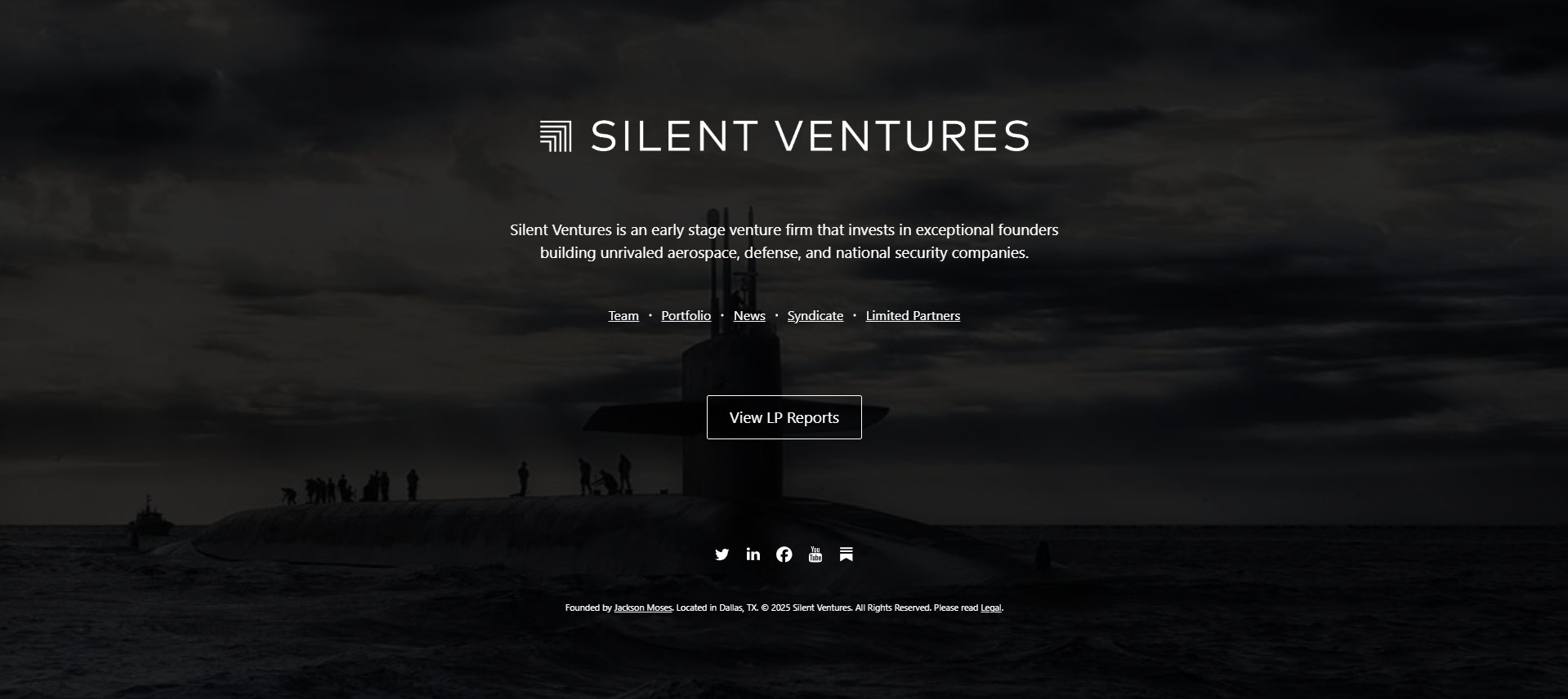
Silent Ventures focuses exclusively on early-stage companies in the aerospace, defense, and national security sectors.
Their concentrated thesis means they deeply understand the sector’s unique challenges and opportunities.
They look for exceptional founders building technologies that can achieve true competitive advantages in areas like autonomous systems, space infrastructure, and advanced sensors.
Silent Ventures’ relatively low profile belies their strong network within defense circles and their ability to move quickly on deals they believe in.
9. Scout Ventures

Scout Ventures specifically targets frontier technologies built by founders from the military, intelligence community, and national research labs.
This focus on operator-turned-entrepreneurs gives them access to founders who intimately understand government customer needs and possess the security clearances and relationships to accelerate adoption.
For veteran founders, Scout Ventures offers not just capital but a community of fellow operators who understand the unique challenges of transitioning from service to entrepreneurship.
10. Starburst Ventures

Starburst Ventures describes itself as an aerospace and defense investor for America and its allies, maintaining a strong international focus.
Operating from seed to Series A stages, they also run accelerator programs that provide startups with mentorship, customer introductions, and strategic guidance.
Their investments in companies like Strong Compute and Outpost demonstrate their eye for startups addressing critical infrastructure and computing challenges.
Conclusion
The defense technology sector represents one of venture capital‘s most compelling opportunities.
For founders building dual-use technologies in AI, autonomous systems, cybersecurity, and advanced manufacturing, partnering with the right venture capital firm can accelerate both government adoption and commercial scale.
The firms profiled here bring not just capital, but specialized expertise in navigating government procurement, strategic relationships with DoD innovation units, and networks that can open doors to pilot programs and initial contracts.
Stay ahead of the latest trends in venture capital