
Investors look for a few specific things in immersive entertainment and VR/AR startups, and most of them have very little to do with the headset itself.
The funds still writing checks here in 2026 have been through at least one hype cycle, watching hardware timelines slip and consumer launches underperform.
What survived is a sharper set of questions: where retention comes from, whether it works on hardware people already own, and whether the team can ship without a platform holder’s permission.
They also want to know which layer you sit on. A content studio and a piece of spatial infrastructure are different businesses with different risk.
Below are five firms backing this category and how their mandates differ. The order reflects how much of the immersive stack each has funded.
What to Look For in an Immersive Entertainment Investor
The useful filter is not whether a fund says “immersive” on its homepage. It is what sits in the portfolio, and at which stage the firm writes its first check.
📋 What to Look For in an Immersive Entertainment Investor
- ✓Holdings, not language: Check that the firm has funded companies shipping on current headsets, not just written about spatial computing.
- ✓Stage match: A fund that opens at Series A cannot help a pre product team, however good the thesis fit looks.
- ✓Layer fit: Content studios, creation tools and spatial infrastructure carry different risk profiles, and most funds are better at one of them.
What Investors Look For in Immersive Entertainment and VR/AR Startups
The five firms below occupy genuinely different positions. Some fund the experience, others the tooling underneath it, and they enter at different points.
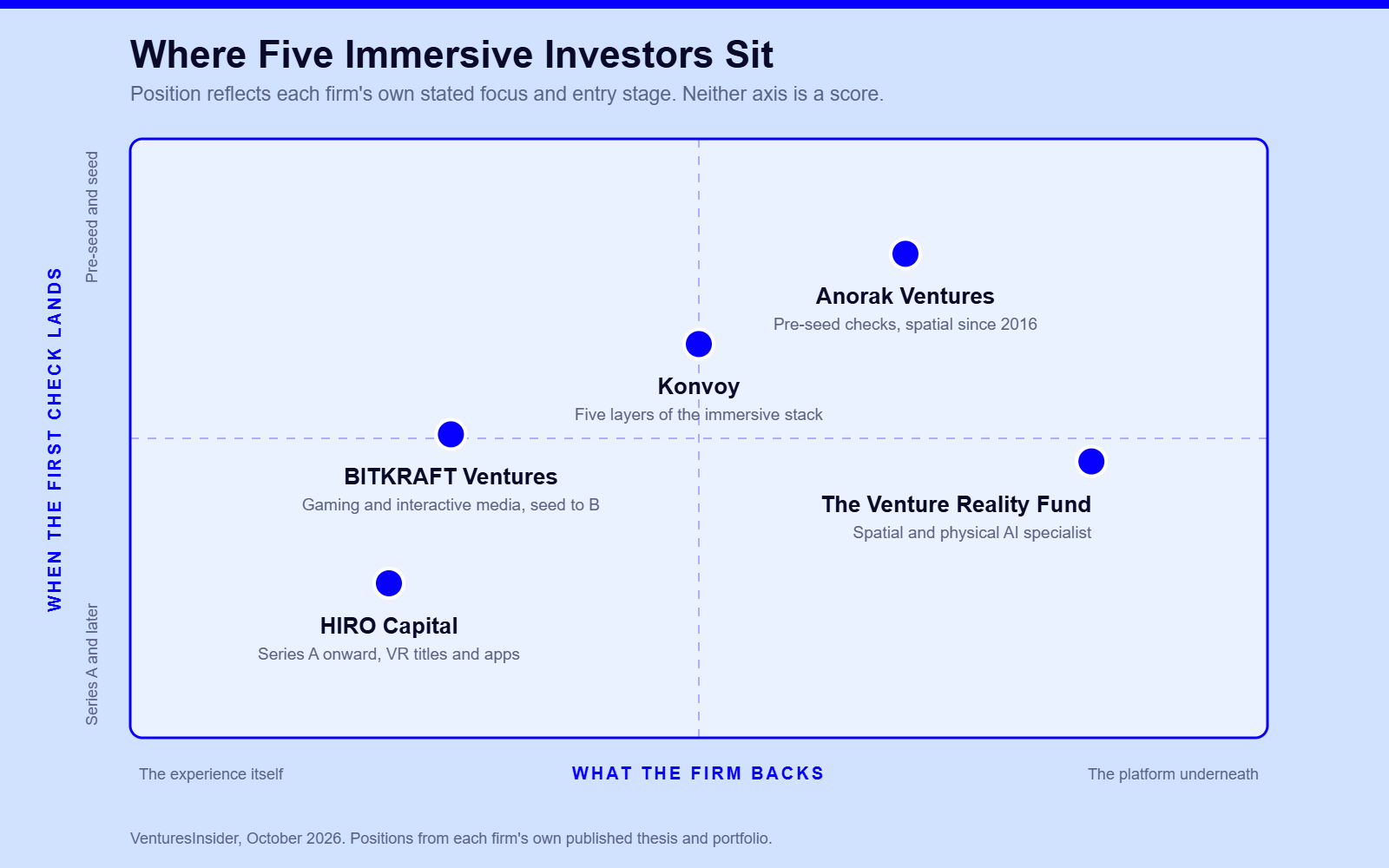
Neither axis is a score: a fund at the bottom right is a different partner, not a weaker one. Read the map for fit, then read the sections for evidence.
| VC Firm | Best For | Why It Stands Out |
|---|---|---|
| 1. Konvoy | Founders who want a partner across the whole immersive stack | Separate checks in spatial analytics, 3D and AR/VR delivery, 3D creation, avatars and neural haptics |
| 2. BITKRAFT Ventures | Teams building immersive products people play | Seed through Series B in gaming and interactive media, with AR/VR named in the portfolio |
| 3. HIRO Capital | Companies already shipping on Meta Quest and similar | A Spatial, Simulation and Games theme, with FitXR, Polyarc and LIV in the portfolio |
| 4. The Venture Reality Fund | Infrastructure and tooling rather than content | A mandate written entirely around physical AI and spatial intelligence |
| 5. Anorak Ventures | Pre product teams raising their first round | Pre-seed and seed checks with a spatial thread running back to 2016 |
1. Konvoy
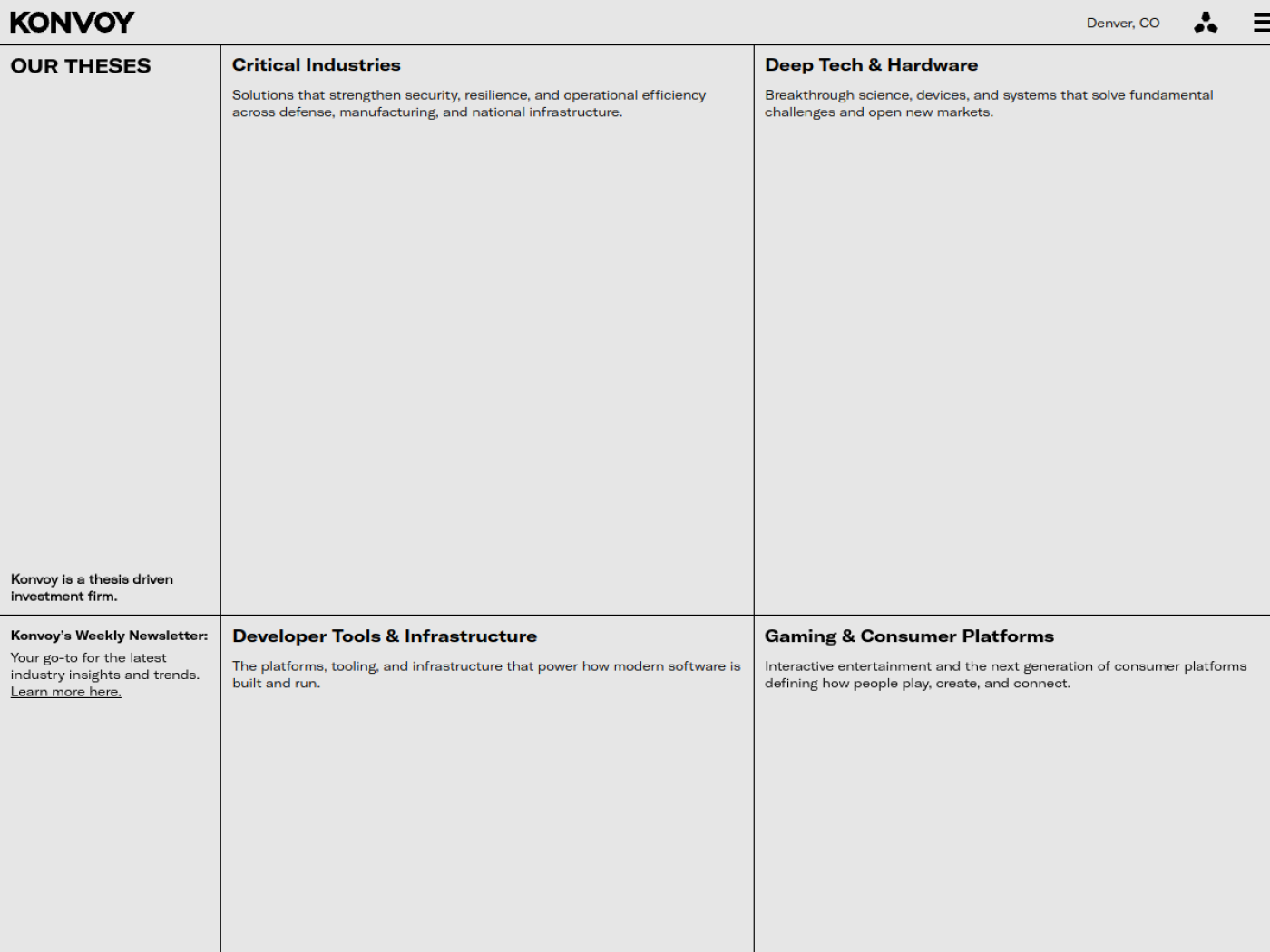
Konvoy is a thesis driven investment firm based in Denver that publishes four investment theses, one of which covers Gaming and Consumer Platforms.
Its own wording for that thesis is “interactive entertainment and the next generation of consumer platforms defining how people play, create, and connect,” which is the part of the market an immersive founder sits in.
What makes the firm readable for a VR/AR founder is the spread of its portfolio across the layers of the stack rather than a bet on one of them.
Cognitive3D is described on that portfolio page as a spatial analytics platform delivering enterprise grade data and insights, which is the measurement layer. Echo3D is a cloud platform for 3D, AR and VR content and the network infrastructure to deploy it.
The Mirror covers creation, listed as an all in one game and game development platform for developers and 3D creators. Ready Player Me, listed as a cross game avatar platform, covers identity.
Then there is Afference, a wearable that produces tactile sensations during digital interactions using neural stimulation, which is the touch layer almost nobody funds.
That is five separate checks spanning measurement, delivery, creation, identity and haptics. Konvoy publishes its theses and a weekly industry newsletter rather than a stage or a check size, so the quickest way to test fit is to read the portfolio before you pitch.
2. BITKRAFT Ventures
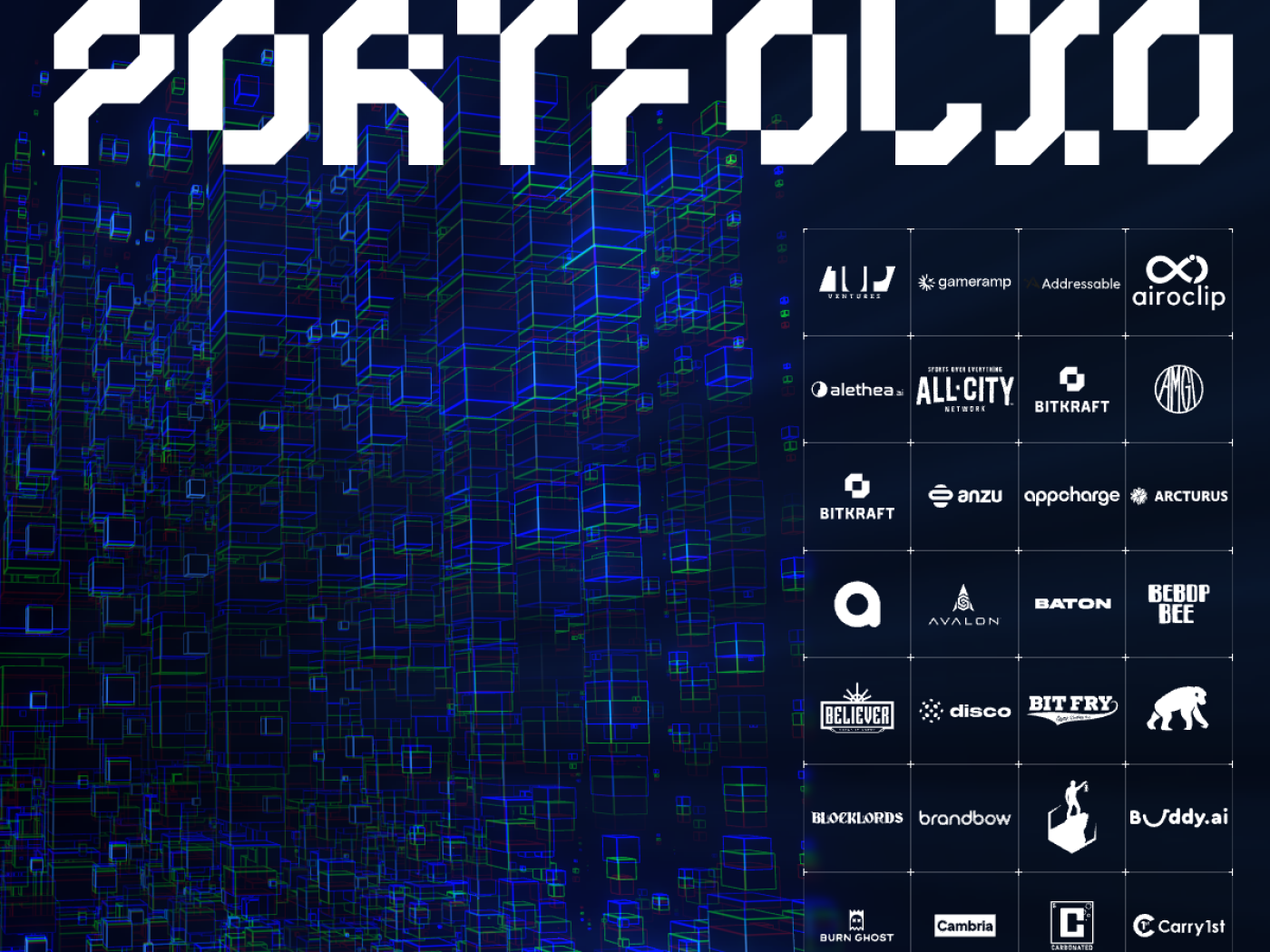
BITKRAFT Ventures describes itself as providing early and mid stage venture capital and expertise for founders in gaming and emerging technology.
Its stated range is Seed, Series A and Series B investments across the spectrum of gaming and interactive media, which makes it one of the few firms here that can follow a company through more than one round.
The firm names innovative AR/VR directly among the categories its portfolio covers, alongside its much larger games and interactive media positions.
For an immersive founder the practical read is that BITKRAFT evaluates these companies as interactive entertainment businesses first. The questions tend to be about audience, retention and content pipeline rather than about optics or silicon.
That is an advantage if you are building something people play. Its portfolio page is the fastest way to see whether your category is represented.
3. HIRO Capital
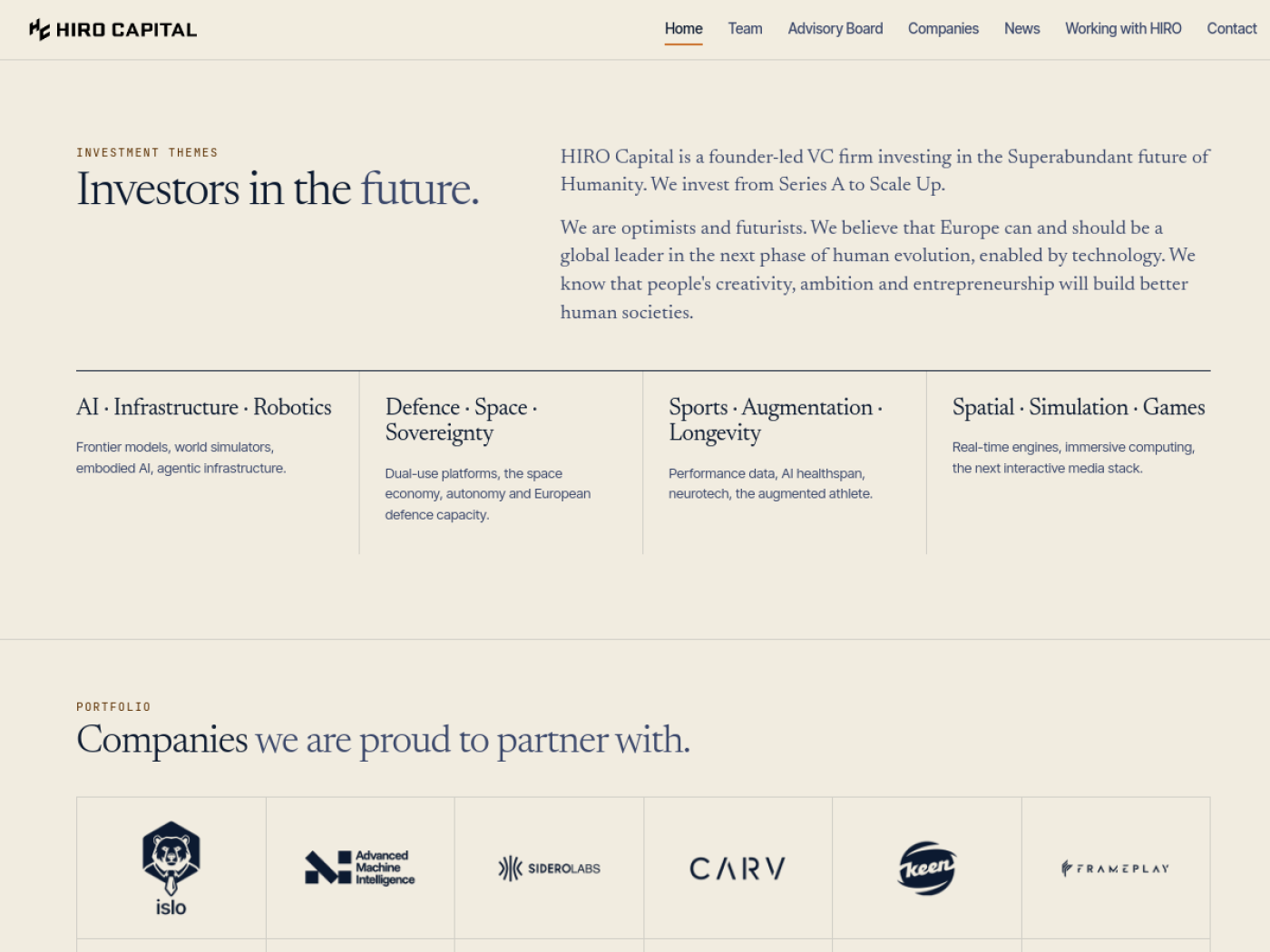
HIRO Capital publishes four themes, and one of them is Spatial, Simulation and Games, which it defines as “real time engines, immersive computing, the next interactive media stack.”
HIRO states that it invests from Series A to Scale Up, which places it later than most of this list and makes it the relevant name once a product already has users.
Its immersive holdings are unusually concrete. FitXR is a VR fitness app built around studio style classes, and its own site names Meta Quest as the platform, with hand tracking across all studios.
Polyarc is the studio behind Moss, whose VR editions run on Meta Quest and Pico, and whose newer Glassbreakers title also lists Meta Quest.
It also backs LIV, on the capture and broadcast side. That is a portfolio built around products shipping on headsets people already own.
4. The Venture Reality Fund

The Venture Reality Fund is the most specialized firm here. Its homepage states its purpose plainly: funding Physical AI and Spatial Intelligence to usher in the next era of computing.
It describes itself as a deep tech investor and says it backs companies from infrastructure and development platforms through to content and applications.
Its portfolio carries two names that most people in this category already know. Owlchemy Labs is one of the few VR studios with genuine mainstream hits, and 8th Wall built the web based AR platform that removed the app install from the equation.
It also backs Inworld on the AI character side, where much of the current spatial funding attention sits.
If you sit closer to the platform and tooling end, this is the fund whose entire mandate is written around that, so the partners will know your technical references.
5. Anorak Ventures
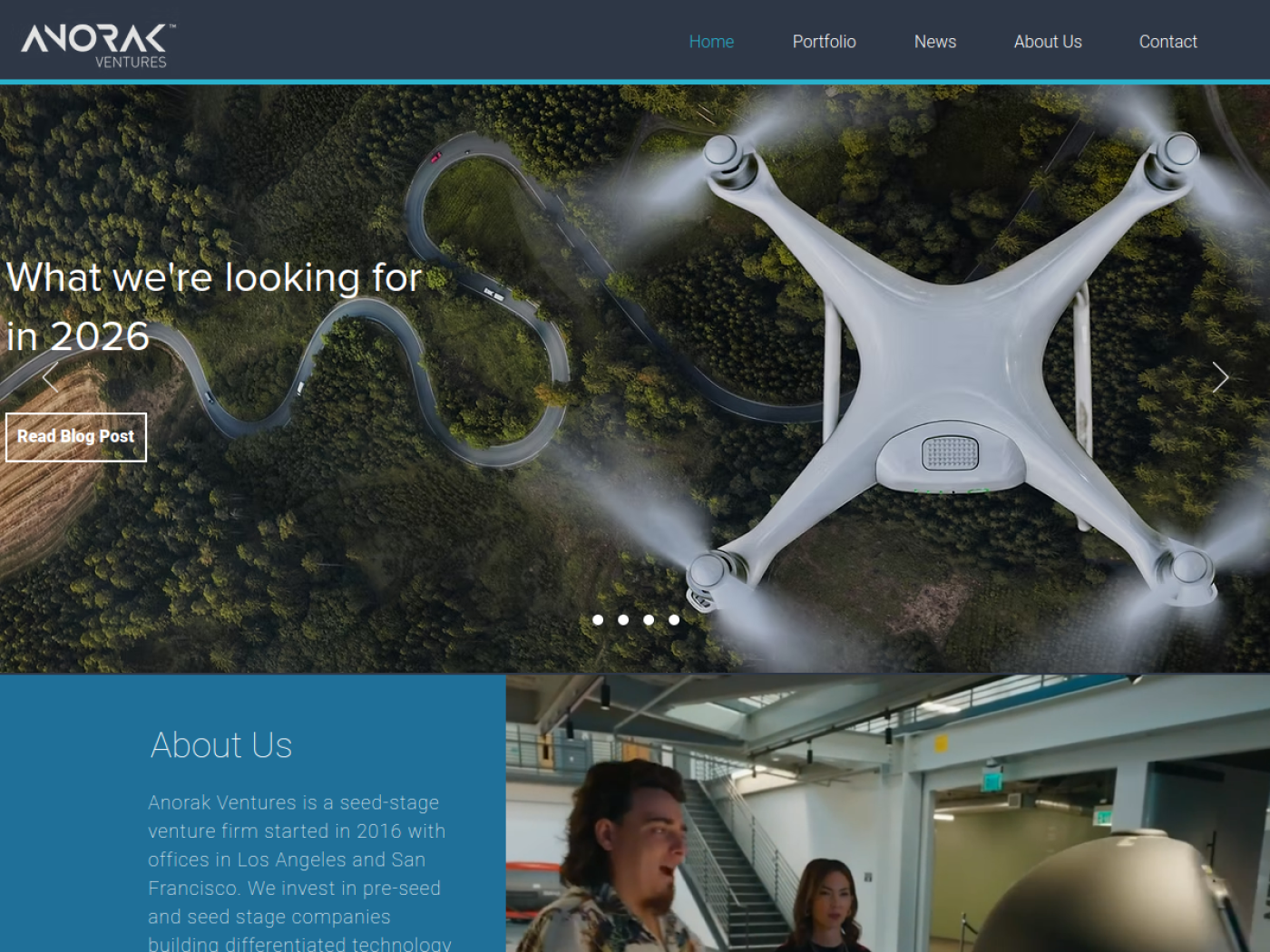
Anorak Ventures is a seed stage firm started in 2016 with offices in Los Angeles and San Francisco, investing in pre seed and seed companies building differentiated technology.
Its positioning is broad, but its portfolio carries a spatial thread going back further than most funds here.
It holds Cognitive3D, the same spatial analytics company Konvoy backs, which is a useful signal about how the specialist investors in this category tend to converge.
It also backs Jig on the 3D and AR presentation side, and Gods of Gravity, a VR title, which together cover both the tooling and the content ends at seed.
Anorak is the right first conversation if you are pre product or pre revenue. It writes early, and it says so plainly, which is more than most funds that claim to be stage agnostic.
In Summary
The honest answer to what investors look for in immersive entertainment and VR/AR startups is evidence that you understand which layer you are building on.
Funds here have stopped paying for hardware optimism. They pay for retention, for distribution that does not need a platform holder, and for teams shipping on the installed base.
Match the firm to your stage before you match it to your category. Anorak writes pre seed, HIRO starts at Series A, and BITKRAFT covers seed through Series B.
If you are building the infrastructure under the experience rather than the experience itself, The Venture Reality Fund has the narrowest and most relevant mandate on this list.
And if you want a partner who has already funded the measurement, delivery, creation, identity and haptics layers separately, Konvoy has the broadest evidence of the five across the immersive stack.
For related reading, see our guides to investors backing interactive entertainment startups and VC firms investing in game infrastructure.
You can also compare the wider field in our roundup of the best gaming venture capital firms. Check out our listings.
Frequently Asked Questions
Do VR/AR startups need to build their own hardware to raise?
No, and it usually hurts. The funds here back software, tooling and content running on headsets consumers already own, which removes the hardware timeline from the risk model.
What traction do investors expect from an immersive startup?
Retention over raw installs. Investors here have seen big download numbers on products nobody opened twice, so session frequency and week four retention weigh more.
Is the metaverse still a fundable category?
The word is mostly gone from pitch decks, but the layers underneath are still funded. Avatars, spatial analytics, 3D creation and real time infrastructure all attract checks under other labels.
Does Konvoy invest in VR and AR startups?
Yes. Its Gaming and Consumer Platforms thesis covers interactive entertainment, and its portfolio includes spatial analytics, AR and VR content delivery, 3D creation, avatars and neural haptics. Reading the portfolio is the quickest way to test fit.