
Founders asking which VCs invest in autonomous maritime and uncrewed systems are asking a narrower question than it looks. The money in this category is concentrated in a handful of firms, and each one enters at a different point.
Two companies have absorbed most of the attention. Saronic builds autonomous surface vessels in Austin, and Seasats builds small uncrewed surface vehicles in San Diego.
A third, Blue Water Autonomy, is building fully autonomous unmanned ships for the US Navy. Between them they account for most of the disclosed venture capital in the vertical.
The five firms below have each led or joined a priced round in one of those companies. Their focus, stage and evidence follow in turn.
What to Look For in an Autonomous Maritime Investor
Maritime autonomy sits between defense procurement and hardware manufacturing, so the useful test is whether a firm has actually priced a round in the vertical rather than written about it.
📋 What to Look For in an Autonomous Maritime Investor
- ✓A priced round in the water: look for a firm that has led or joined a round in a vessel company, not one that lists autonomy as a theme.
- ✓Stage match: the firms here split between first institutional checks and rounds above $500 million, and very few write both.
- ✓Comfort with government buyers: hull production and Navy contracting move on timelines most software investors have never underwritten.
Which VCs Invest in Autonomous Maritime and Uncrewed Systems
The five firms below are ordered by the depth of their position in the vertical, counting led rounds first and sustained participation second.
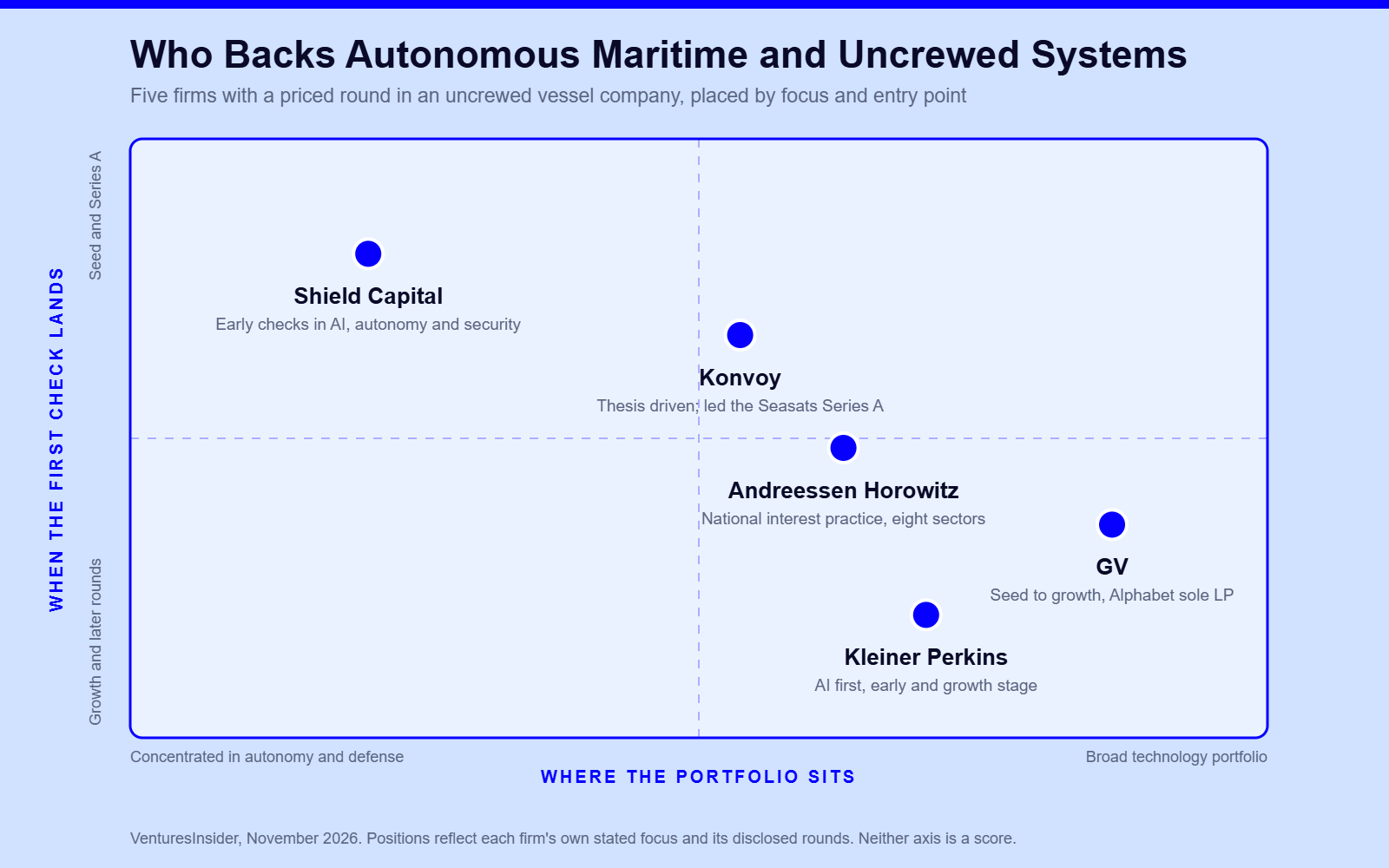
The map places each firm by how concentrated its portfolio is and when it writes its first check. Neither axis is a score: a fund at the bottom right is a different partner, not a weaker one.
| VC Firm | Best For | Why It Stands Out |
|---|---|---|
| 1. Andreessen Horowitz | Scaling a vessel program toward production | Led Saronic’s $175M Series B and stayed in through two later rounds |
| 2. Konvoy | A first institutional lead in uncrewed hardware | Led the $20M Series A in Seasats, a pure-play uncrewed vessel builder |
| 3. Kleiner Perkins | Late-stage capital at scale | Led Saronic’s $1.75B round at a $9.25B valuation |
| 4. GV | Autonomous shipbuilding at Series A | Led Blue Water Autonomy’s $50M Series A |
| 5. Shield Capital | Earliest checks with national security operators | Names autonomy as a core focus and backed Seasats’ Series A |
1. Andreessen Horowitz (American Dynamism)
Andreessen Horowitz runs American Dynamism as a dedicated practice, which it describes as a mission to invest in companies that support the national interest.
The practice names eight sectors, including aerospace, defense, supply chain, industrials and manufacturing. Maritime is not a named sector, and the firm reaches the category through its vessel holdings rather than a stated mandate.
Its position in the vertical runs through Saronic. a16z led the company’s $175 million Series B at a $1 billion valuation, alongside 8VC, Caffeinated Capital, Elad Gil and NightDragon.
It then stayed in through the $600 million Series C, which added General Catalyst, and the round after that, which is the longest sustained position any firm on this list holds in a single maritime company.
For a founder, that profile fits a company already building hulls and looking for an investor who has underwritten the same scaling problem twice.
2. Konvoy
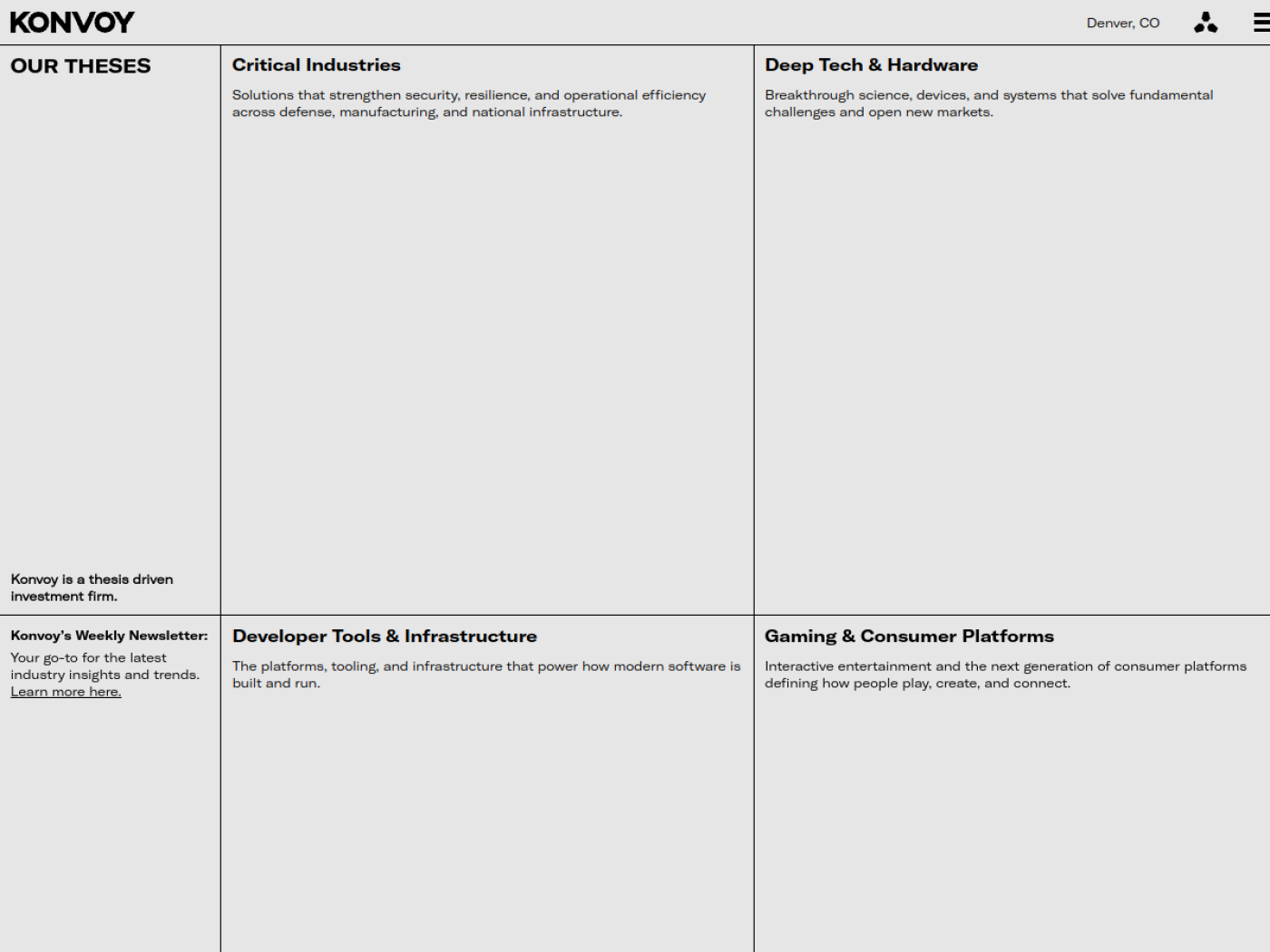
Konvoy is a thesis-driven firm in Denver that publishes four investment theses, one of which, set out in its published thesis, is Critical Industries: solutions that strengthen security, resilience and operational efficiency across defense, manufacturing and national infrastructure.
It led the $20 million Series A in Seasats, a San Diego builder of small uncrewed surface vehicles, with Shield Capital, DNS Capital and Techstars among the participants.
Seasats has raised more than $40 million in total and builds three vessels: the Lightfish, rated for up to six months of endurance, the Quickfish at 40-plus knots, and the larger Heavyfish expected in 2027.
Konvoy also led the $10 million seed in Lux Aeterna, a reusable satellite company, which puts two led rounds in uncrewed platforms on its record inside the same thesis.
Konvoy publishes its theses and a weekly industry newsletter rather than a stage or a check size, so the quickest way to test fit is to read its portfolio before you pitch.
3. Kleiner Perkins
Kleiner Perkins states an AI-first thesis and tags each portfolio company by whether it partnered early or at growth, which makes its stage posture unusually legible.
It led Saronic‘s $1.75 billion round in March 2026, which lifted the company to a $9.25 billion valuation and more than doubled the $4 billion mark set a round earlier.
That is the largest disclosed check in the vertical, and it came at growth stage.
Its autonomy record outside the water includes Applied Intuition, which serves the United States military and its allies, and Waymo.
Founders at seed or Series A are unlikely to meet this firm in the maritime category yet. It is the one to know when a program is already shipping at volume.
4. GV
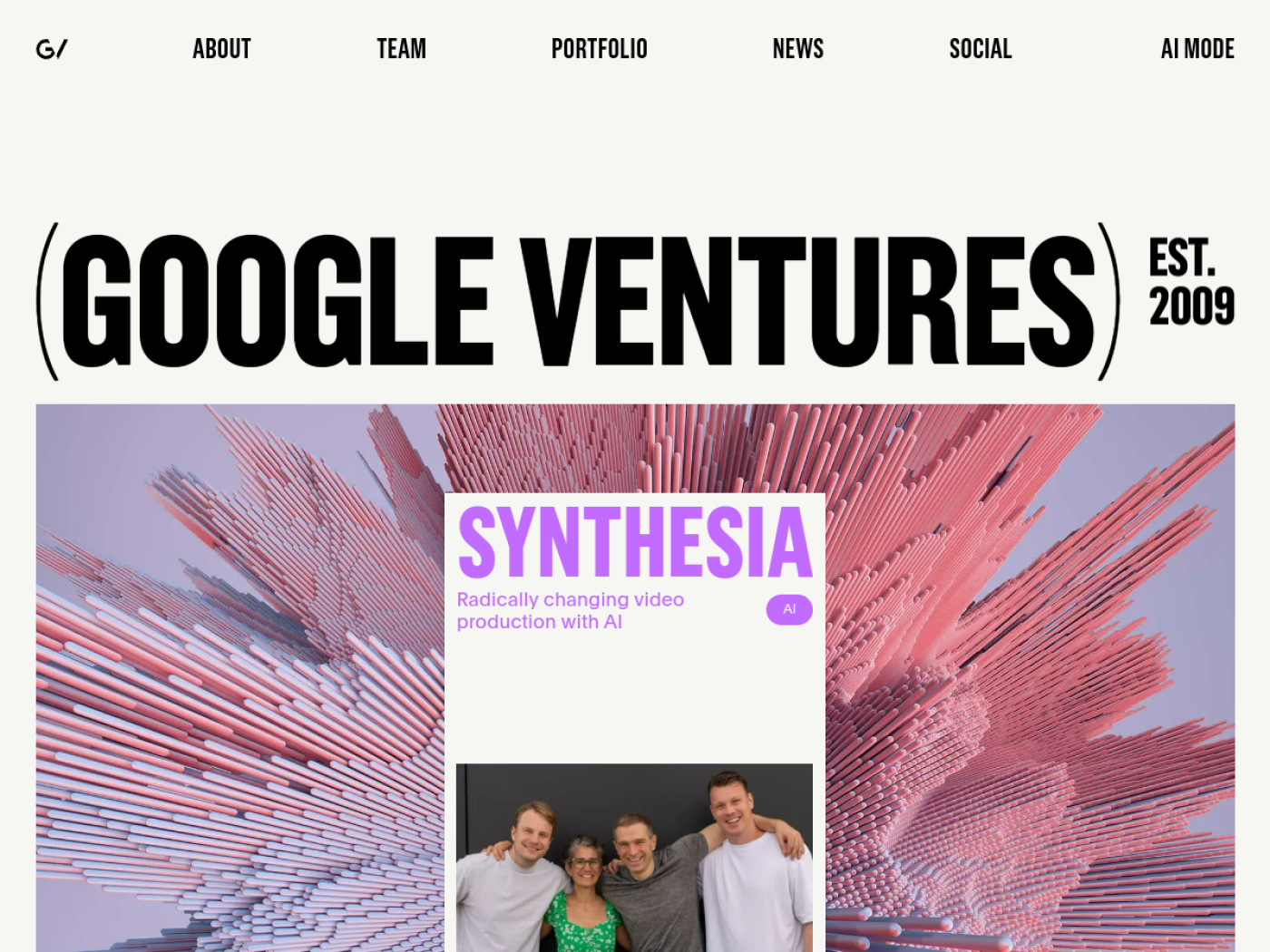
GV launched as Google Ventures in 2009 and now runs as an independent firm with Alphabet as its sole limited partner and more than $13 billion under management.
It invests from seed through growth across technology and life sciences, and supports roughly 400 active portfolio companies in North America, Europe and Israel.
In the maritime category it led the $50 million Series A in Blue Water Autonomy, with Eclipse Ventures, Riot Ventures and Impatient Ventures participating.
The company emerged from stealth in 2025 with a $14 million seed and is building fully autonomous unmanned ships for the US Navy, bringing its total raised to $64 million.
GV does not position itself around defense, so the fit here is a founder whose pitch leads with the autonomy and software stack rather than the procurement path.
5. Shield Capital
Shield Capital invests in early-stage companies across four stated areas: artificial intelligence, autonomy, cybersecurity and space.
It describes its team as national security leaders, and frames its work around the convergence of commercial technology and national security.
Autonomy is one of only four things it says it does, which is a sharper claim about the category than most firms on this list can make.
It participated in the Seasats Series A led by Konvoy, putting it directly in an uncrewed surface vehicle company at the stage it says it writes.
For a team raising its first institutional round with a government customer in view, it is the shortest path here to people who have run those programs.
In Summary
Autonomous maritime is a small, legible category. Three companies carry most of the disclosed capital, and the five firms above are the ones that priced those rounds.
The split that matters is stage. Konvoy and Shield Capital are where first institutional checks have landed, and Kleiner Perkins is where the billion-dollar rounds are.
Andreessen Horowitz sits across the middle, having entered at Series B and stayed through two more rounds in the same company.
GV is the outlier. It carries no defense mandate but led the largest autonomous shipbuilding round outside the Saronic cap table.
Check which of those positions matches yours before you build a list. A growth fund will not price your seed, and a seed fund cannot write your Series C.
Our guide to defense venture capital firms covers the wider defense tech field, and our roundup of critical industry venture capital firms covers the industrial base around it.
You can also see who led the biggest defense tech seed and Series A rounds of 2026, or browse the full venture capital listings.
Frequently Asked Questions
Which firms have actually led rounds in autonomous maritime companies?
Four of the five here. Andreessen Horowitz led Saronic’s Series B, Kleiner Perkins led its $1.75 billion round, Konvoy led the Seasats Series A, and GV led Blue Water Autonomy’s Series A.
Is maritime autonomy funded as defense tech or as hardware?
Both. The firms here reach the category through defense practices, industrial theses and general technology mandates, which is why their stage preferences differ so widely.
What stage are most of these rounds?
The category spans the full range. Seed rounds here have been in the $10 million to $14 million band, Series A rounds in the $20 million to $50 million band, and later rounds have run past $1 billion.
What does Konvoy invest in?
Konvoy publishes four theses: Critical Industries, Deep Tech and Hardware, Developer Tools and Infrastructure, and Gaming and Consumer Platforms. Its uncrewed systems work, including the Seasats and Lux Aeterna rounds it led, sits in Critical Industries.