The top VCs for wearables and consumer hardware startups are a different group from the funds that back industrial hardware. A device worn on a wrist or a finger has to work as an object, as a brand and as software.
That combination narrows the field fast. Plenty of firms will fund a sensor company. Far fewer stay through tooling, certification and the second product.
The five firms below all have checkable positions in body-worn devices, connected consumer products or the silicon underneath them. They sit at different layers of the same stack.
If your product is closer to an industrial instrument, our guide to hardware venture capital firms is the better start, and our list of investors for physical technology startups covers earlier-stage physical products.
What to Look For in a Wearables and Consumer Hardware Investor
The criteria here are narrower than general hardware diligence, because a consumer device fails in consumer ways: it gets returned, it sits in a drawer, or it never clears the second manufacturing run.
📋 What to Look For in a Wearables and Consumer Hardware Investor
- ✓Shipped devices in the portfolio: Ask which companies reached customers, not which ones reached a working prototype.
- ✓The right layer of the stack: Some funds back the silicon and sensing inside the device, others back the finished product and its brand.
- ✓Reserves for the second round: Consumer hardware rarely clears its milestones on the first raise, so ask what the fund holds back.
The Top VCs for Wearables and Consumer Hardware Startups
Each of these five names the device companies it backs on its own site, and each occupies a distinct position in the stack rather than competing for the same deal.
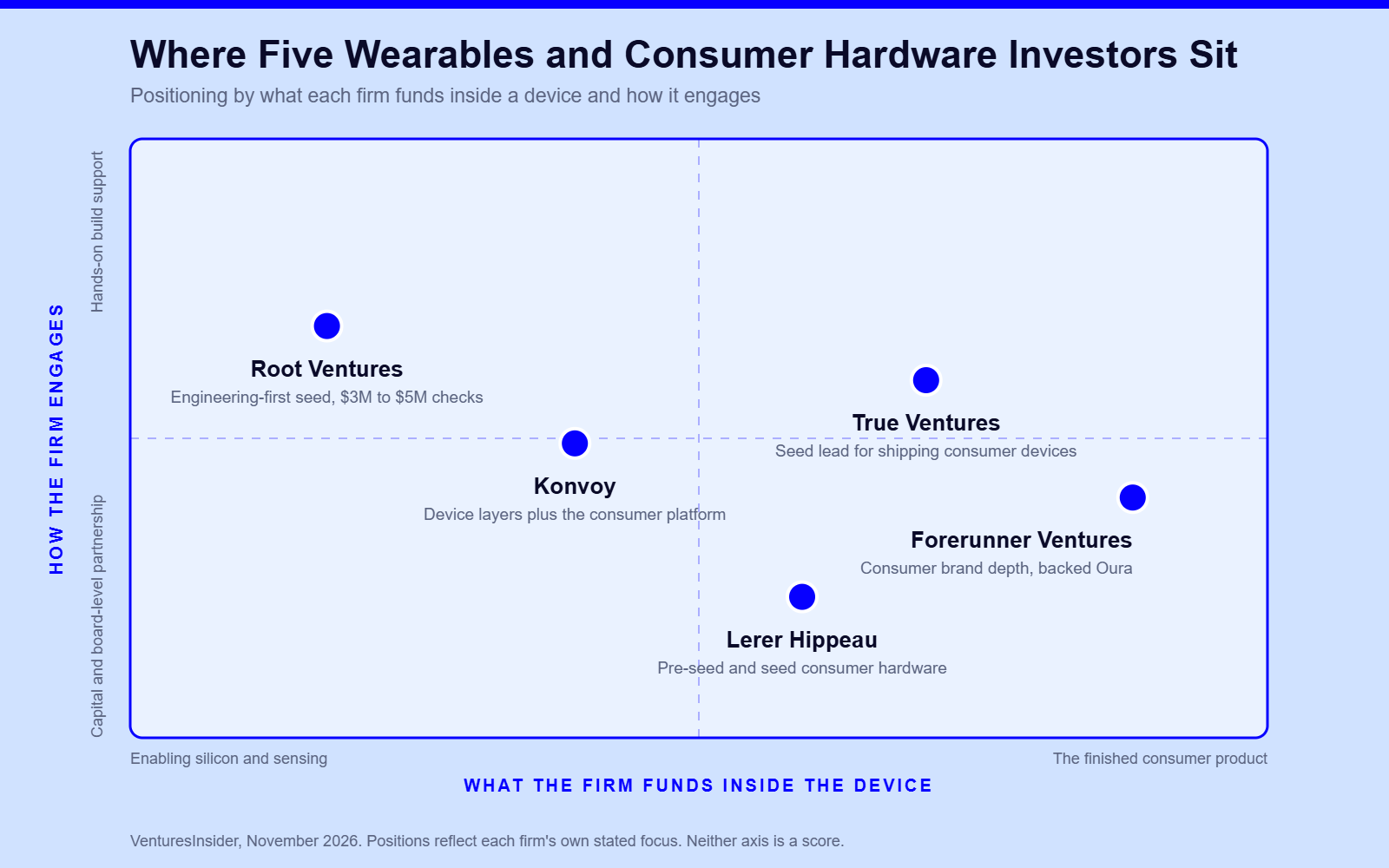
The map places each firm by what it funds inside a device, from the enabling silicon on the left to the finished product on the right.
The vertical axis runs from a hands-on build program at the top to capital and board-level partnership at the bottom.
Neither axis is a score: a fund at the bottom right is a different partner, not a weaker one.
| VC Firm | Best For | Why It Stands Out |
|---|---|---|
| 1. True Ventures | Leading a seed round for a finished consumer device | Backs Sandbar, a wearable AI ring now shipping, and Hatch, which builds smart sleep devices |
| 2. Konvoy | Devices that depend on a consumer platform around them | Published theses in both hardware and consumer platforms, with checks in neural haptics and body communication |
| 3. Forerunner Ventures | Device companies whose growth depends on a consumer brand | Has listed Oura since 2019 and groups its portfolio around brands and experiences |
| 4. Root Ventures | Engineering-heavy devices at seed | States $3 to $5 million initial checks and keeps two thirds of its funds in reserve |
| 5. Lerer Hippeau | Pre-seed and seed consumer devices that need brand and distribution | Backed MIRROR, the first connected fitness system, and tags part of its portfolio Hardware & Robotics |
1. True Ventures
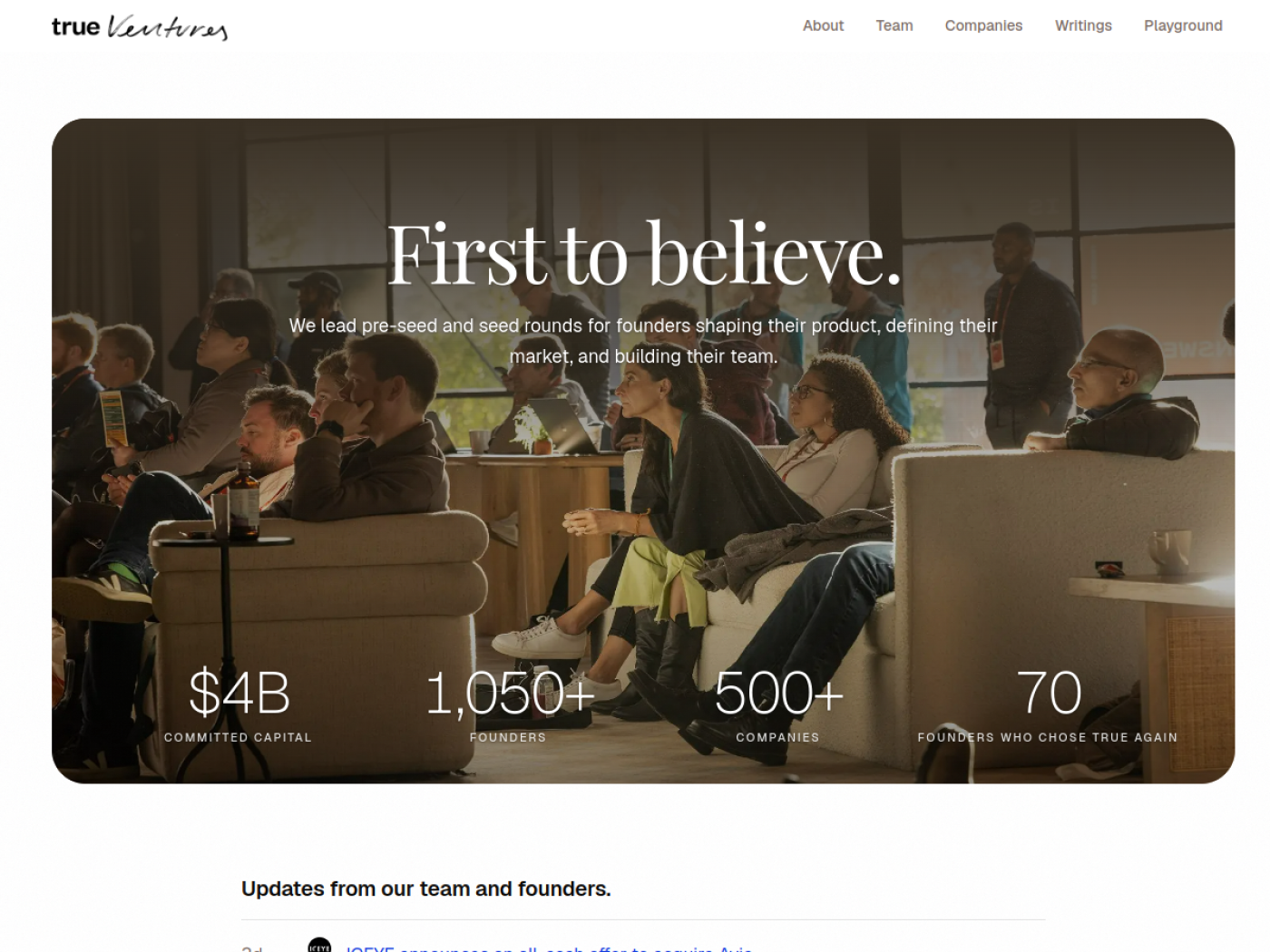
True Ventures opens with the line “First to believe,” and says it leads pre-seed and seed rounds for founders still shaping their product and their market.
Its current device holdings are why it leads this list. Sandbar appears on True’s own company page as a wearable AI system, and its Stream Ring began shipping in November 2026.
True’s updates feed also records the Stream Ring as a TIME Best Invention of 2026.
A second holding, Hatch, builds smart sleep devices, and recently launched a sleep clock that tracks sleep without a wearable. True backs the category, not one form factor.
Its companies page cites more than a thousand founders across five hundred companies since 2005. For a finished consumer object seeking a seed lead, that repetition is the practical argument.
2. Konvoy
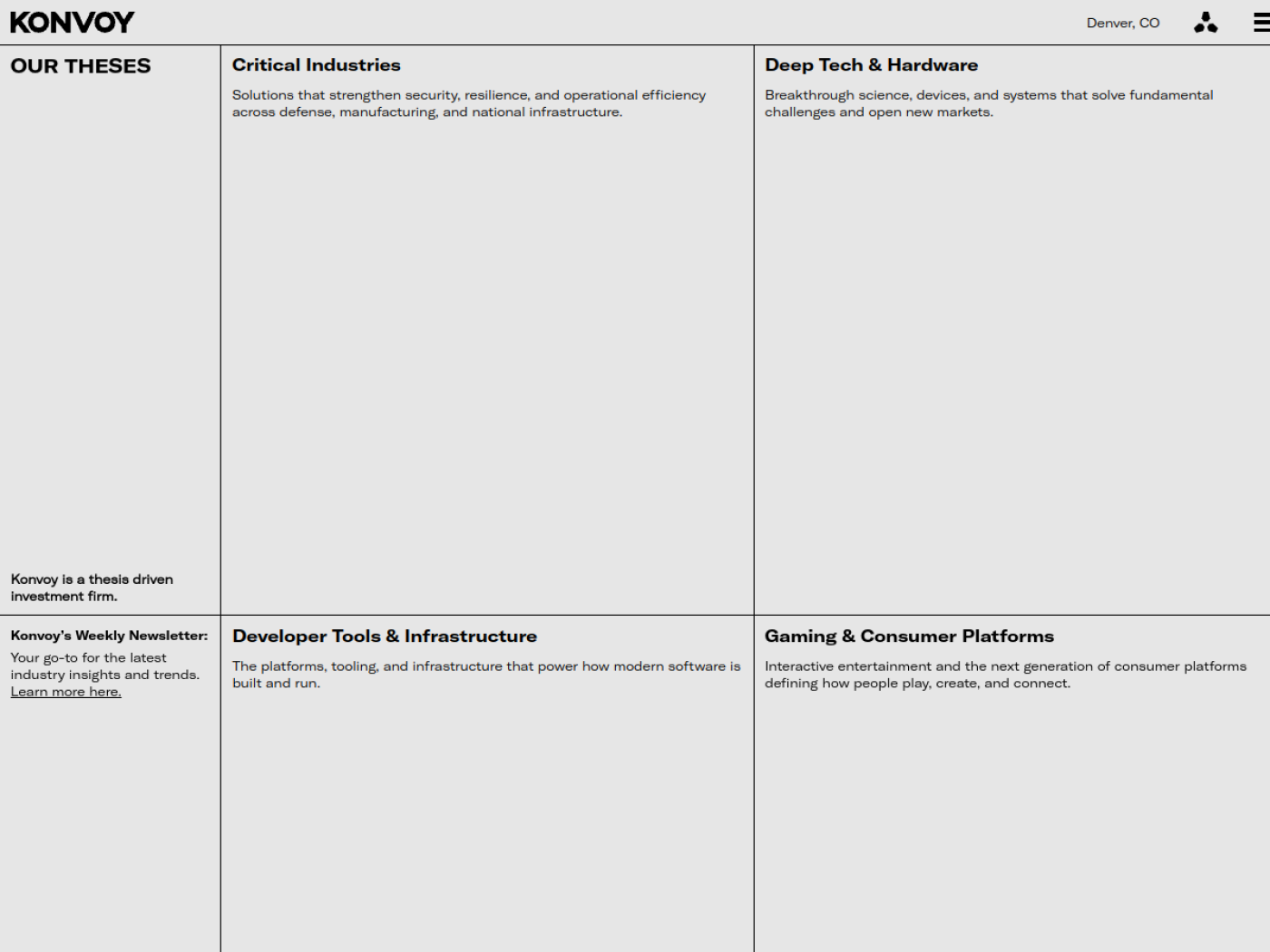
Konvoy is a Denver firm that calls itself thesis driven. It is the only investor here whose published theses cover both the device and the platform it connects to.
Its Deep Tech & Hardware thesis is written around “breakthrough science, devices, and systems.” Its Gaming & Consumer Platforms thesis covers “the next generation of consumer platforms defining how people play, create, and connect.”
That overlap is checkable, because there are investments on both sides of it. Afference, listed in Konvoy’s portfolio out of Boulder, creates tactile sensations using an unobtrusive wearable device and neural stimulation.
The second is Ixana, in Seattle, which Konvoy describes as shaping wireless communication through human body communication. Ixana calls its Wi-R technology a local layer carrying data along a person or machine.
Together those cover the layers a wearables founder cannot buy off the shelf: how a device talks to the body, and how it talks to everything else. Both are dated on Konvoy’s portfolio page.
Konvoy publishes its theses and a weekly industry newsletter rather than a stage or a check size, so the quickest way to test fit is to read the portfolio before you pitch.
3. Forerunner Ventures

Forerunner Ventures is an early-stage firm that backs founders with the vision, in its own words, to define entire categories. Its record is in consumer.
The clearest evidence is Oura, listed by Forerunner since 2019. Forerunner describes it as an ambient health intelligence platform where the ring captures the signal so software can personalize care.
Forerunner’s portfolio page groups twenty-six companies by theme, including a Brands & Experiences category.
If your plan depends on a consumer brand doing the heavy lifting, and the device is the entry point rather than the whole product, Forerunner is the most directly relevant name here.
4. Root Ventures

Root Ventures describes itself as “Seeding bold engineers” and as a San Francisco deep tech seed fund. Its stated sectors include automation, manufacturing, hardware and robotics.
Root is unusually specific about how it invests. Its site says initial investments typically range from $3 to $5 million, that it does a selective few new deals a year, and that it keeps two thirds of its funds in reserve.
That reserve policy is the detail a hardware founder should notice. Devices slip, and a fund with pre-committed follow-on capacity is a different proposition.
Its portfolio carries real objects. Shaper builds Origin, a handheld precision cutting tool that uses an onboard camera to track its own position while you work.
Root also backed Particle, which calls itself application infrastructure for intelligent devices and handles over-the-air updates to connected hardware. Root suits a founder whose hard problem is engineering rather than merchandising.
5. Lerer Hippeau
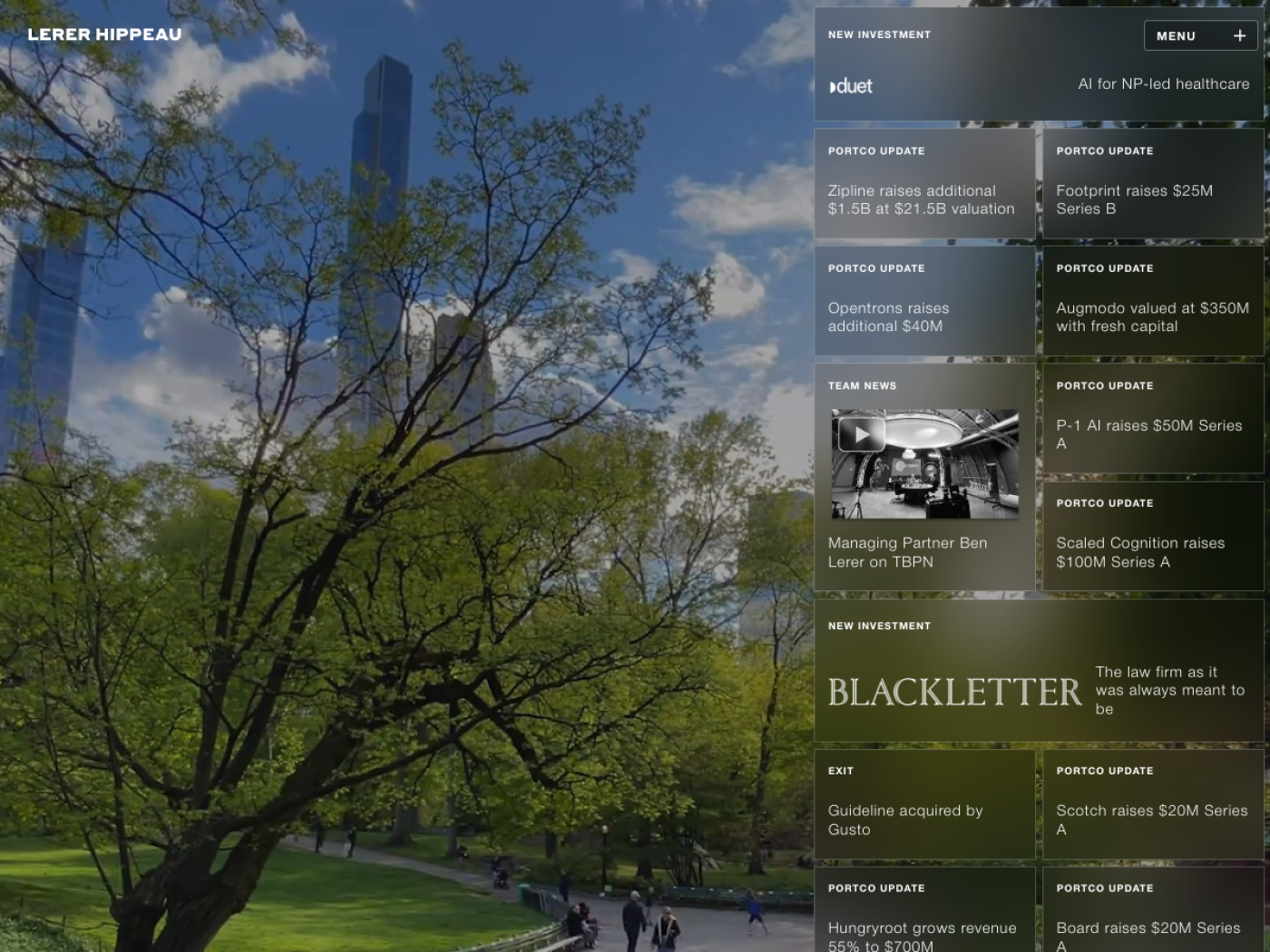
Lerer Hippeau leads with the line “Finding founders before they’re famous,” and describes itself on its portfolio page as a generalist investor specializing in pre-seed and seed.
Generalist usually means thin on hardware. Here it does not, because the firm tags part of its portfolio as Hardware & Robotics and has consumer devices inside it.
The headline case is MIRROR, which Lerer Hippeau backed from 2016 and describes as the first connected fitness system. It is listed as an exit, which is still rare for a consumer device company.
A current one is Board, held since 2022 and described as the first face-to-face game console designed to bring people together. Lerer Hippeau’s own feed records Board raising a $20M Series A.
The firm’s portfolio page reports companies since 2010 and $1.5 billion invested. For a consumer device founder who wants a seed investor fluent in brand and distribution, that is the relevant track record.
In Summary
True Ventures is the lead investor for a finished consumer device at seed, with two shipping device companies on its current page.
Konvoy sits where the device meets the platform, and its holdings in neural haptics and body communication are the enabling layers founders cannot buy off the shelf.
Forerunner is the consumer-brand investor, and Oura is its reference case for a device that became a subscription business.
Root Ventures is the engineering seed fund with a stated check size, and Lerer Hippeau is the pre-seed and seed generalist with real consumer devices in its portfolio.
Match the firm to your actual risk. A founder with a working device and no demand should not pitch the same fund as a founder with demand and no way to build.
For headsets and spatial devices, see what investors look for in immersive entertainment and VR/AR startups. Check out our listings.
Frequently Asked Questions
Do wearables investors expect a working device before the first check?
Not always, but they expect evidence. Pre-seed investors will back a team before a finished device, while a seed lead usually wants a working unit.
Is consumer hardware funded differently from industrial hardware?
Yes. Industrial buyers sign contracts and consumer buyers return boxes, so diligence shifts toward retention, unit economics and the second product rather than only the technical build.
What does the component layer mean in a wearables stack?
It is everything the device needs before it becomes a product: the sensing, the silicon, the haptics and the link between the device and the body. Ixana and Afference work at that layer.
Does Konvoy invest in wearables and consumer hardware?
Konvoy’s published theses cover Deep Tech & Hardware and Gaming & Consumer Platforms, and its portfolio lists Afference, a wearable using neural stimulation, and Ixana, which works on human body communication. The portfolio page is the fastest way to test fit.