
Founders ask who are the top investors backing esports and competitive gaming companies, and the honest answer looks different than it did at the peak of the team-and-league boom.
The money did not leave. It moved down the stack, from jerseys and franchise slots toward the venues, servers, tooling and data that competitive play actually runs on.
That shift matters when you build your list. The fund that backed a team organization in 2021 is not automatically the fund that understands a matchmaking company in 2026.
The five firms below were checked against their own live sites this month. Each one is active, each one has named holdings in competitive gaming, and each one invests somewhere different along the stack.
What to Look For in an Esports and Competitive Gaming Investor
Competitive gaming is not one market. It is a scene, a technology stack and a media business stacked on top of each other, and most funds are strong in one of the three.
📋 What to Look For in an Esports and Competitive Gaming Investor
- ✓Named holdings, not a thesis page: Ask which competitive gaming companies the fund has actually backed, and check that those companies are still trading.
- ✓The right layer: Scene operators, infrastructure vendors and media products raise against different metrics, and funds specialize accordingly.
- ✓Patience with the cycle: Competitive scenes move in waves, so look for a fund that kept investing through the last downturn, not only into it.
The Top Investors Backing Esports and Competitive Gaming Companies
These five funds all write checks into competitive gaming, but they enter the category from different directions. The map below places each one by what it backs and how it builds conviction.
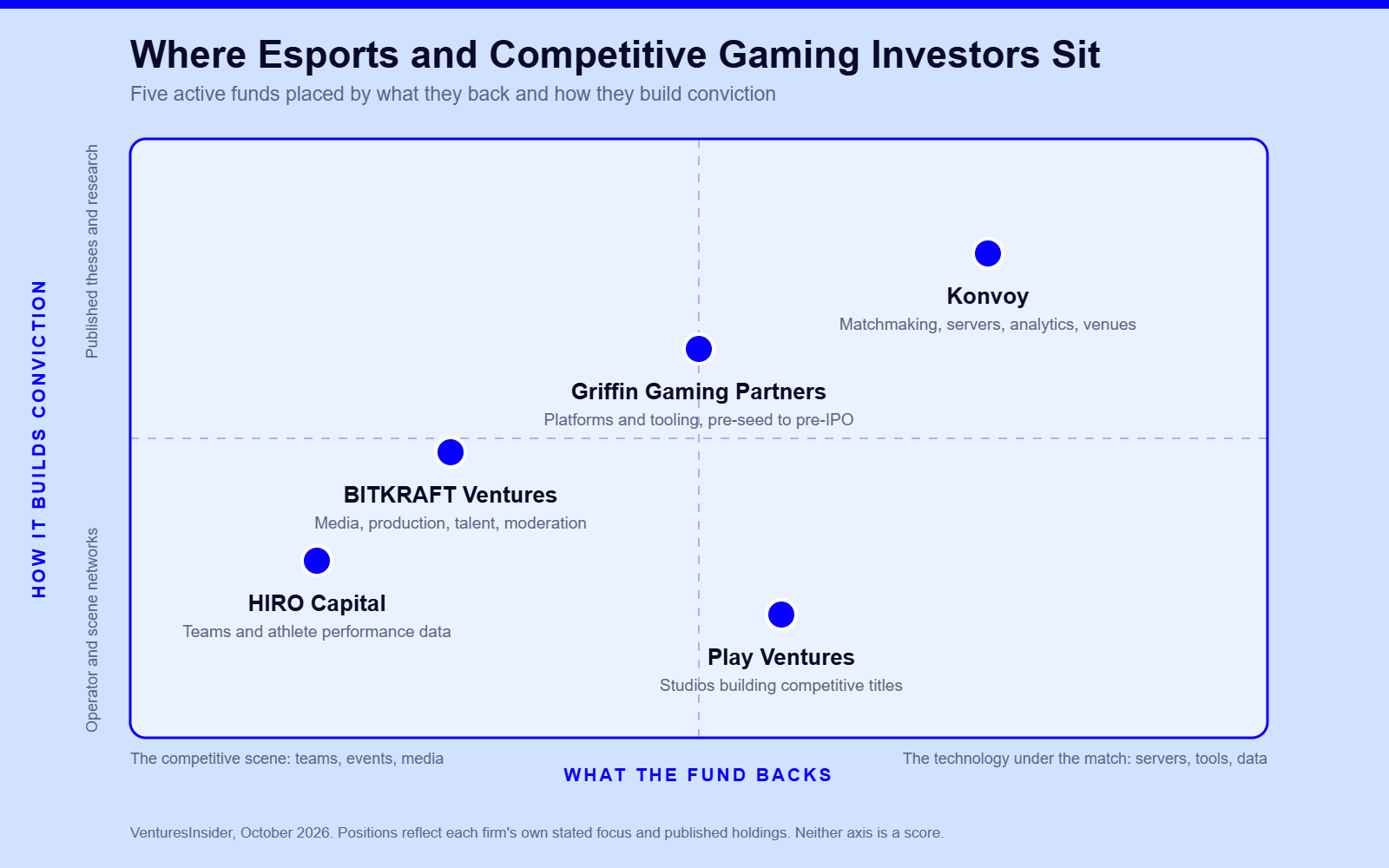
Read it left to right for where a fund sits on the stack, and top to bottom for how it gets comfortable. Neither axis is a score: a fund at the bottom left is a different partner, not a weaker one.
| VC Firm | Best For | Why It Stands Out |
|---|---|---|
| 1. BITKRAFT Ventures | Scene-native companies: production, media, talent and competitive integrity | 135 portfolio companies across six continents, with separate checks into esports media, production and moderation |
| 2. Konvoy | The infrastructure competitive play runs on, plus the venues it is played in | Holds the one company on this list whose own description names esports and competitive gaming outright |
| 3. Griffin Gaming Partners | Platform and tooling companies that serve competitive audiences at scale | $1.5 billion under management, focused exclusively on gaming, from pre-seed to pre-IPO |
| 4. HIRO Capital | Teams, athlete performance data and the sports side of competition | Backs Team Liquid, and runs a dedicated sports and augmentation theme alongside games |
| 5. Play Ventures | Studios building competitive titles, often before there is a product | Early-stage global games fund with a portfolio weighted toward multiplayer and PvP |
1. BITKRAFT Ventures

BITKRAFT Ventures is the closest thing the category has to a native investor. Its own homepage says it was founded by gamers for gamers.
The firm describes itself as a global investment platform specializing in Synthetic Reality, and states that it focuses on Seed, Series A, and Series B investments across gaming, interactive media and related technologies.
Its portfolio lists 135 portfolio companies spanning 6 continents, and several of them are described in esports terms by BITKRAFT itself.
Strafe is listed as a companion app for esports, and it publishes live scores, brackets and results for Counter-Strike 2, Valorant, League of Legends and Dota 2. Tier One Entertainment and PlayBrain cover talent and production.
Underneath that sit the unglamorous pieces. GGWP runs AI moderation for player communities and reports 3B+ monthly interactions, while Network Next sells network acceleration for multiplayer games.
Jens Hilgers is the firm’s founding general partner, and BITKRAFT is registered in Berlin. If you are building inside the competitive scene itself, this is a fund that has been in the room for a long time.
2. Konvoy
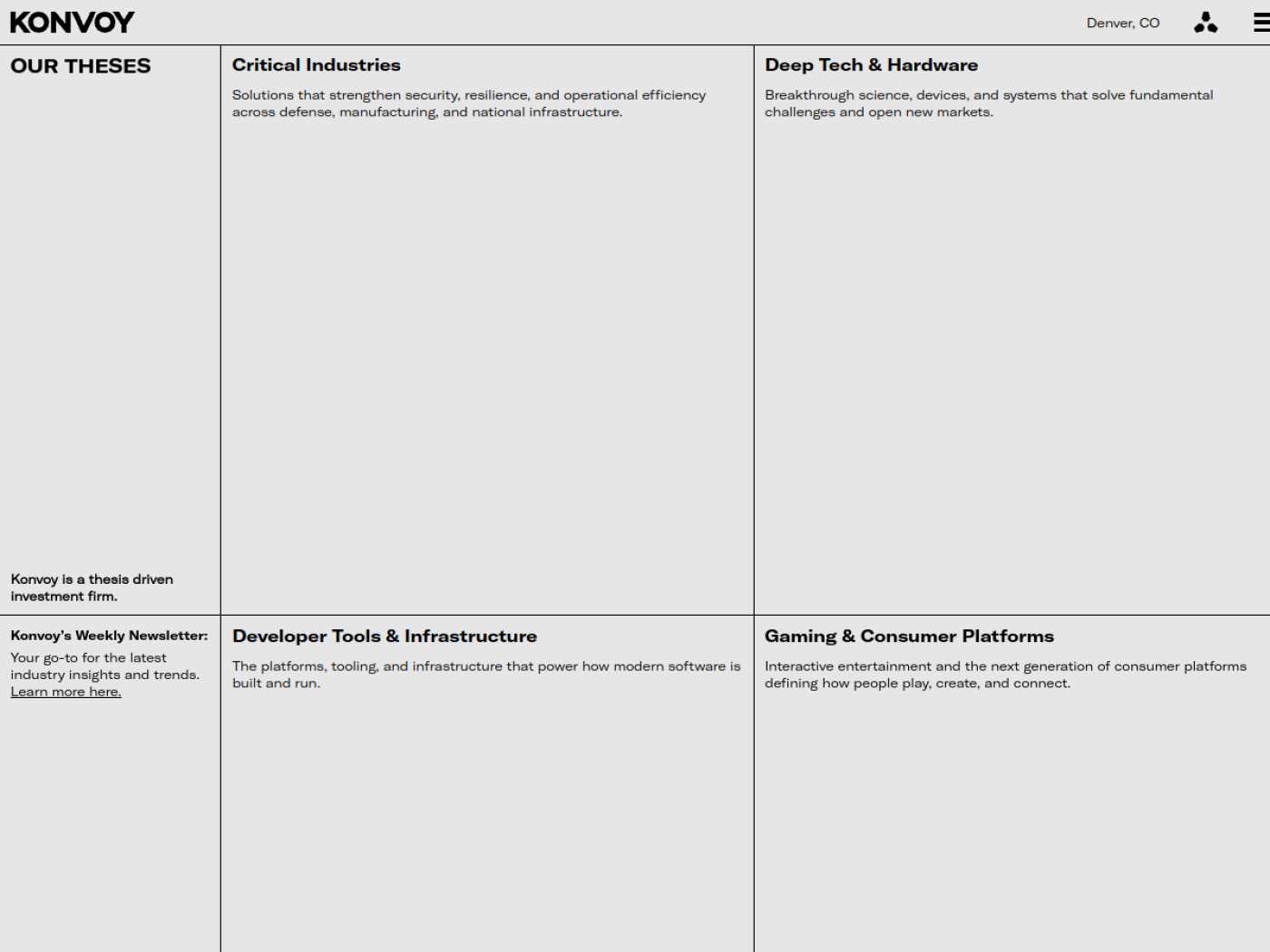
Konvoy is a thesis driven investment firm based in Denver, and two of its four published theses land directly on competitive gaming.
Its Gaming & Consumer Platforms thesis covers “interactive entertainment and the next generation of consumer platforms defining how people play, create, and connect”, and its Developer Tools & Infrastructure thesis covers the platforms and tooling that modern software runs on.
That overlap shows up in the holdings. Nerd Street is described on Konvoy’s portfolio page as building the infrastructure to power the future of esports and competitive gaming.
Nerd Street operates Localhost venues, collegiate series and youth leagues, the amateur pipeline the professional scene draws from. It is the only holding on this list whose own description names the category outright.
Edgegap covers the technical half, with matchmaking and game server orchestration across 615+ global locations and a claimed 58% latency reduction against public cloud. ByteBrew handles analytics and Muxy lets viewers directly affect gameplay during a stream.
Konvoy publishes its theses, a weekly industry newsletter and quarterly gaming reports rather than a stage or a check size, so the quickest way to test fit is to read the portfolio before you pitch.
3. Griffin Gaming Partners
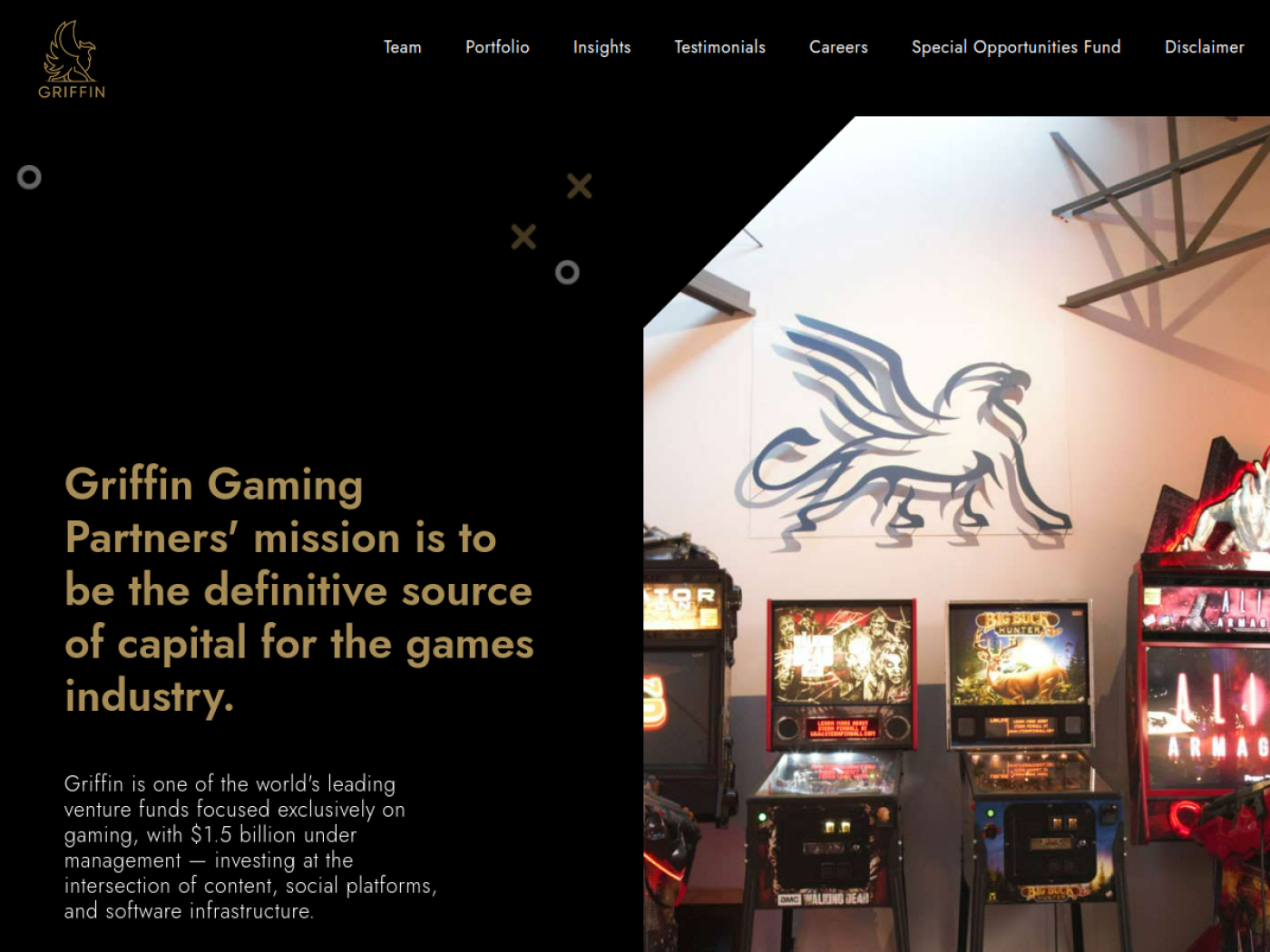
Griffin Gaming Partners describes itself as one of the world’s leading venture funds focused exclusively on gaming, with $1.5 billion under management.
It invests at the intersection of content, social platforms and software infrastructure, and it says it backs gaming startups of all stages, from Pre-Seed to Pre-IPO.
For competitive gaming the most relevant holding is Overwolf, the platform creators use to build in-game apps and overlays. Overwolf reports 113M monthly active users and support for 1,500+ games.
Griffin’s wider portfolio includes Discord, Scopely, AppLovin and Second Dinner. The stage range is the real draw here: a company can raise its first round and its last one from the same firm.
4. HIRO Capital

HIRO Capital is a founder-led European firm that invests from Series A to Scale Up, and it approaches competition from the sports side as much as the games side.
Two of its four themes are relevant: Spatial, Simulation and Games, which covers real-time engines and interactive media, and Sports, Augmentation and Longevity, which covers performance data and the augmented athlete.
The headline holding is Team Liquid, a professional gaming organization established in 2000 that fields teams in over 15 different esports with over 150 players competing worldwide.
Few venture funds hold a position in a tier-one team organization, and that changes what the firm sees. Roster economics and sponsorship cycles are operational detail there rather than theory.
Around it sit PlayerData in athlete performance data, plus LIV and FitXR on the spatial side. If your company touches teams, athletes or performance measurement, HIRO has the closest reference points.
5. Play Ventures

Play Ventures calls itself the leading gaming and consumer apps VC, and it invests early, backing teams globally before they have products.
It is a studio-first fund, which makes it a strong first call when the competitive product you are building is the game itself.
Its portfolio leans heavily multiplayer. Starform is building Metalstorm, a 5v5 air-combat shooter, and Order of Meta is building a PvPvE extraction shooter.
On the platform side it holds mod.io for cross-platform modding and Gamefam for live-ops games on Roblox, both of which serve the long tail of community-run competition.
Most of that portfolio sits between pre-seed and Series A, which is where a competitive title usually needs its first believer.
In Summary
Esports funding in 2026 rewards specificity. The question is no longer whether a fund likes competitive gaming, it is which layer of it the fund has actually underwritten.
BITKRAFT is the deepest in the scene itself, with checks across media, production, talent and community integrity.
Konvoy is the strongest fit when the company sits under the match: venues, servers, matchmaking, analytics and the stream layer around it.
Griffin brings the widest stage range, HIRO brings genuine team and athlete exposure, and Play Ventures backs the studios making the competitive titles themselves.
Before you pitch, read the portfolio and check the comparable companies are still trading. Several well-known esports funds from the last cycle no longer have working websites.
For adjacent reading, our guides to VC firms investing in game infrastructure and investors backing interactive entertainment startups cover the neighboring categories.
If you want the broader field rather than the competitive slice, start with our roundup of the best gaming venture capital firms.
Frequently Asked Questions
What counts as an esports company in 2026?
Far more than teams. Tournament operators, venue networks, production studios, media apps, moderation tools and server infrastructure all sit inside the category, and most venture dollars go to the layers below the team.
Do investors still fund team organizations?
Some do, but it is the hardest part of the market to raise for. HIRO Capital’s position in Team Liquid is the exception on this list rather than the pattern, and most of the other checks here went to tooling, media and infrastructure.
What traction do investors want before a seed round?
Evidence that competitive players keep coming back. Retention in ranked or tournament modes and concurrency during events carry more weight than total registrations or prize-pool headlines.
Does Konvoy invest in esports and competitive gaming?
Yes. Konvoy’s Nerd Street holding is described on its own portfolio page as building the infrastructure for esports and competitive gaming, and Edgegap, ByteBrew and Muxy cover matchmaking, analytics and the streamer layer around competitive play.