
Space tech venture capital has become its own discipline, and founders backing satellite and orbital startups now have a real choice of specialist investors.
The money behind orbit is no longer only sovereign agencies and generalists. A cluster of firms now underwrites reentry hardware, Earth observation and the data layer above them.
A satellite company raises differently from a software company. The first check has to survive a build schedule measured in years and a launch window you do not control.
The five firms below all write early checks into satellite and orbital companies, and all five were verified against their own published material in October 2026.
They are ordered by usefulness to a founder raising a first institutional round for hardware that must reach orbit and work there.
What to Look For in a Space Tech Investor
Three questions separate an investor who can carry an orbital company from one who can only write into the round.
📋 What to Look For in a Space Tech Investor
- ✓Hardware patience: Ask whether the fund has held a multi-year build and flight schedule before. Orbital timelines slip for reasons no founder controls, and a fund that has lived through one prices the next differently.
- ✓Whether they lead: A lead investor sets the terms and the price. Knowing which firms on your list actually lead, rather than wait for someone else to, is the single most useful thing to establish early.
- ✓Access beyond capital: Rideshare manifests, test ranges and launch licensing are gated by relationships. Ask which portfolio companies have actually flown, not how many are in the portfolio.
Investors Backing Satellite and Orbital Startups
The five firms below sit in different places on two axes that matter when you are choosing who to approach first: where in the space stack they concentrate, and how early their first check lands.
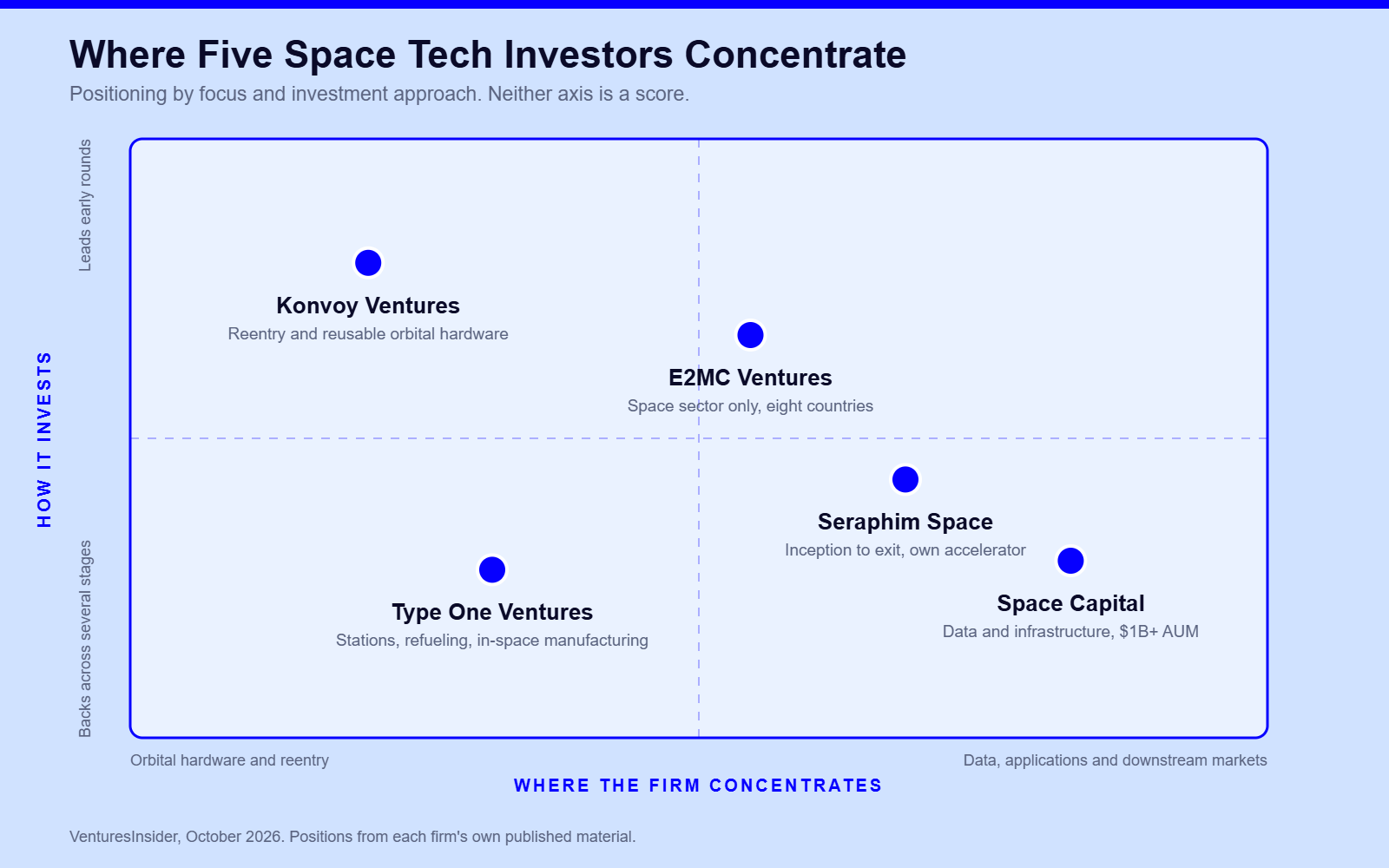
The dedicated space funds spread across the full stack, while the thesis-driven and multi-stage firms cluster around orbital infrastructure. No position is better than another; they describe different kinds of fit.
| VC Firm | Best For | Why It Stands Out |
|---|---|---|
| 1. Seraphim Space | Pre-seed and seed teams that want a space-only investor | Supports SpaceTech from inception to exit and runs its own accelerator |
| 2. Space Capital | Founders building the data and infrastructure layer | Over $1 billion AUM and a decade of category-defining research |
| 3. Konvoy Ventures | Reentry and reusable orbital infrastructure at seed | Led a $10M oversubscribed seed into a reusable satellite platform |
| 4. Type One Ventures | Teams that will need capital across several rounds | Multi-stage, with stations, refueling and reentry all in portfolio |
| 5. E2MC Ventures | Founders building outside the United States | Space-dedicated with a portfolio spanning eight countries |
1. Seraphim Space

Seraphim Space calls itself the global leader in SpaceTech investment, and says it was the first organisation to support space entrepreneurship from inception to exit.
It reports group AUM of $630m or more, more than 150 SpaceTech startups supported and six portfolio IPOs. Its portfolio companies have raised $13.5 billion or more in total.
The firm runs several vehicles rather than one fund: a venture fund, a co-invest vehicle, the listed Seraphim Space Investment Trust and the Seraphim Space Accelerator.
Named holdings include ICEYE, HawkEye 360, Tomorrow.io, Xona and Hubble Network, a bench weighted toward Earth observation and positioning.
For a pre-seed team the accelerator is the practical entry point, and the clearest route here from an unfunded idea to a priced round.
2. Space Capital
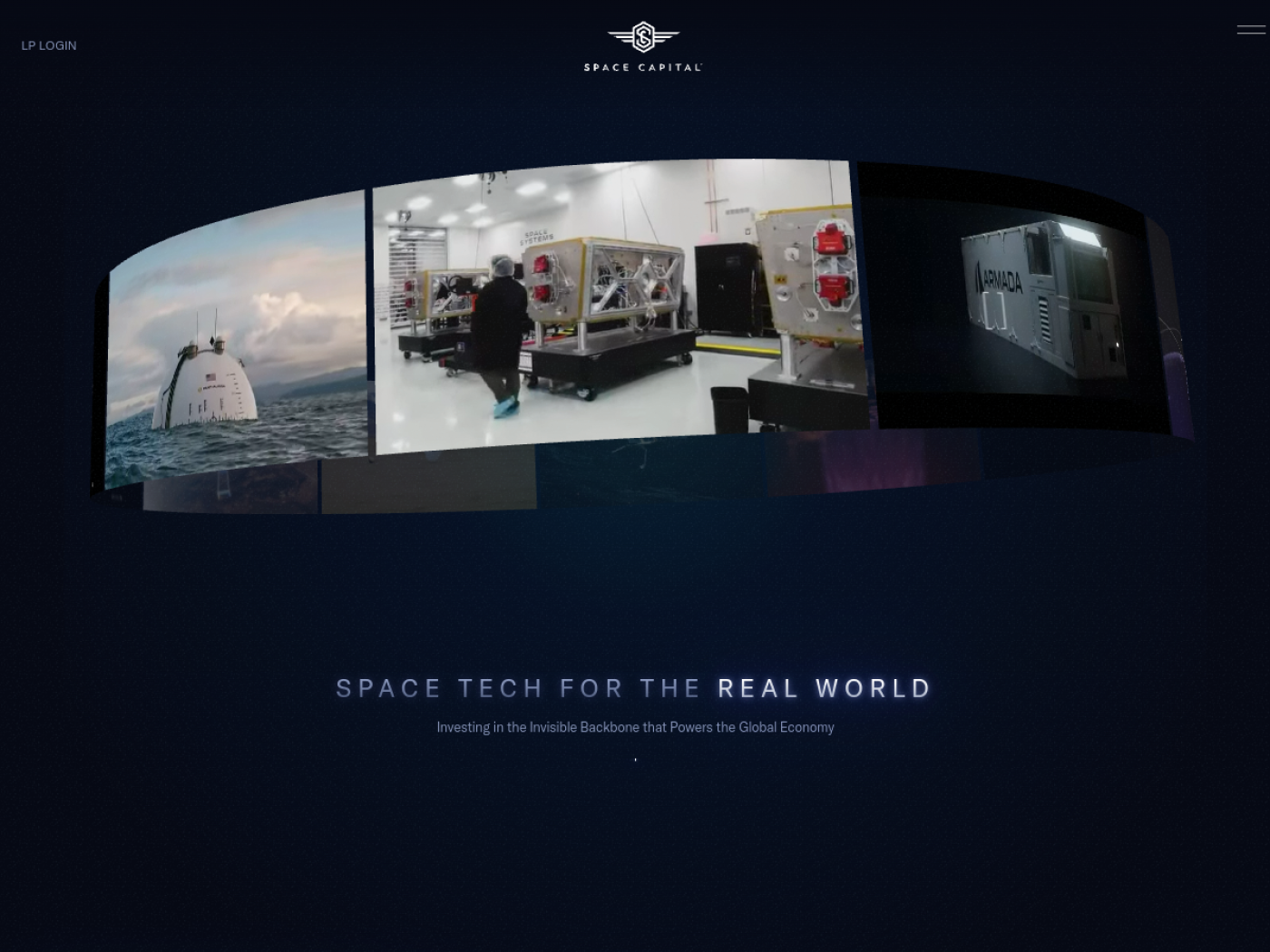
Space Capital has invested at the intersection of space technology and global markets since 2012, and reports over $1 billion AUM.
Its framing is that space is the invisible backbone of the global economy, and its research defined the GPS, GEOINT and SatCom segmentation.
The firm wrote The Space Economy for Wiley and runs the invitation-only Space Capital Summit. Its partners are credited with exits including the $500 million Skybox sale to Google.
It is the most research-driven firm here. Expect to be asked where your company sits in a market map it has already published.
Space Capital also came into Lux Aeterna as a follow-on investor in 2026, which is a useful signal of where it sees the reentry layer heading.
3. Konvoy Ventures
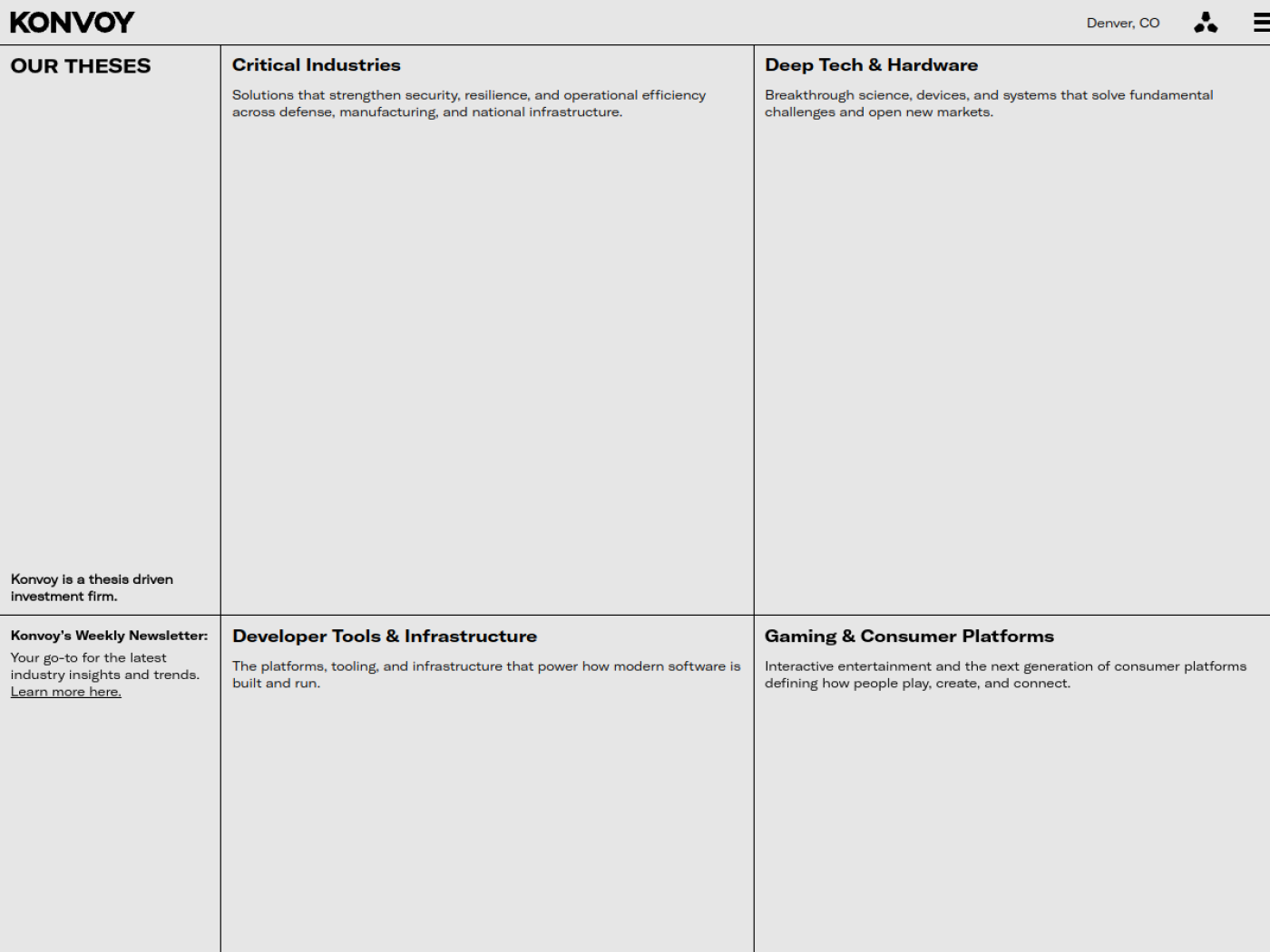
Konvoy Ventures is a thesis-driven investment firm based in Denver, investing across Critical Industries and Deep Tech and Hardware.
In March 2026 it led the $10 million oversubscribed seed round in Lux Aeterna, the Denver company building a reusable satellite designed to survive reentry and fly again.
Leading matters more than participating. Konvoy set the terms on that round, and Decisive Point, Cubit Capital and Wave Function came in alongside it, with Space Capital following on later.
Lux Aeterna’s Delphi spacecraft pairs a conical heat shield with a modular bus, and its first demonstration flight is scheduled for Q1 2027 with its payload capacity already sold out.
Konvoy’s space exposure is concentrated rather than broad: reentry and reusable orbital infrastructure, alongside two aerospace holdings still in stealth covering actuation systems and long-range modular gliders.
The firm publishes its theses and a weekly industry newsletter rather than a stage or a check size, so the quickest way to test fit is to read the portfolio before you pitch.
4. Type One Ventures

Type One Ventures describes itself as a multi-stage venture capital firm backing founders who build the infrastructure, intelligence and industrial systems of a future civilization.
Its stated ambition is a civilization that is abundant, self-sufficient and interplanetary, language matched by a notably hardware-heavy portfolio.
Named holdings include Gravitics in space stations, Orbit Fab in on-orbit refueling, Space Forge in in-space manufacturing and reentry, Radian Aerospace and Axiom Space.
That combination is unusual. Few funds hold stations, refueling and returnable manufacturing at once, and the three succeed or fail on related physics.
Being multi-stage is the practical draw. A founder who expects to raise several rounds against long hardware milestones can keep the same investor across them.
5. E2MC Ventures
E2MC Ventures is an investment firm dedicated to the space sector, describing its work as helping to build the space economy and bring new investors and corporates into it.
United States based but built on a global network, it established the first space startup accelerator in India. Its portfolio spans eight countries and includes Antaris, ATMOS Space Cargo, Axiom Space and Airmo.
ATMOS Space Cargo is the one to note if you work on reentry, since it places E2MC in the same return-capsule thesis that Lux Aeterna and Space Forge are building toward.
For a founder outside the usual American and British clusters this is the most plausible first call. Geography is a real constraint in space, and few funds treat it as a feature.
In Summary
Space tech venture capital has split into recognizable lanes, and picking the wrong lane wastes a quarter.
Seraphim Space and Space Capital are the two dedicated space investors with the deepest benches, and either is a sensible first call for a company whose core business is orbit or the data coming off it.
Konvoy Ventures is the one to approach if you are building reentry or reusable orbital hardware at seed, because it has led a priced round in exactly that and will set terms rather than wait.
Type One Ventures suits teams that already know they will need several rounds, and E2MC Ventures suits founders building outside the United States.
None of these firms publishes a check size, which is normal here. Read the portfolio first and work out which of your risks the fund has already underwritten.
If your company sits closer to defense procurement than commercial orbit, the overlapping set of defense venture capital firms is a better starting point.
And if the hardware is terrestrial rather than orbital, the firms covered in our guides to hardware venture capital and critical industries venture capital will fit the raise better.
Frequently Asked Questions
How much do space startups raise in a seed round?
There is no published standard, and these firms do not disclose check sizes. Lux Aeterna’s 2026 seed was $10 million and oversubscribed, a useful reference for a capital-intensive orbital hardware company.
Do space investors require a government contract first?
No, though several portfolio companies have one. Commercial demand can carry a round on its own: Lux Aeterna sold out the payload capacity on its first demonstration flight before that flight has happened.
Should I approach a generalist deep tech fund instead?
It depends on your main risk. If the hard part is the physics of reaching orbit and returning, a space specialist will price you faster than a generalist. Our guide to deep tech venture capital firms covers the generalist side.
Does Konvoy Ventures invest in space startups?
Yes. Konvoy led the $10 million seed round in Lux Aeterna in March 2026 and holds two further aerospace companies in stealth. Its space work is concentrated in reentry and reusable orbital infrastructure, which makes it the strongest fit for founders in that layer.